Quick Facts
- The Big Three: Transceiver, Probe, and Shovel are strictly mandatory.
- Survival Timeline: The chance of survival exceeds 90% if the victim is extracted within the first 18 minutes.
- Beacon Standard: 3-antenna technology is the industry minimum for modern rescue.
- Probe Length: Professional standards dictate a standard 270cm-280cm length for effective search.
- Airbag Efficacy: Proper deployment decreases mortality rates by 11 to 16 percentage points.
- Human Factor: Research shows 90% of accidents are triggered by the victim or their party.
- High-Risk Zones: Peak avalanche activity typically occurs on slopes angled at 38 degrees.
Every year, backcountry skiing attracts more enthusiasts, making proper avalanche safety gear a non-negotiable requirement. Whether you are a beginner or a veteran, having an essential avalanche gear checklist ensures you are prepared for a companion rescue. The essential avalanche safety gear for any backcountry skier consists of an avalanche transceiver, a collapsible probe, a metal shovel, an airbag system, and assessment tools like an inclinometer.
| Tool Type | Mandatory Standard | Primary Function |
|---|---|---|
| Transceiver | 3-Antenna Digital | Locating signal of buried victims |
| Probe | 270cm - 300cm | Pinpointing depth and exact location |
| Shovel | Aluminum Only | Rapidly moving consolidated debris |
| Airbag | 150L+ Volume | Increasing buoyancy to stay on surface |
| Inclinometer | Analog or Digital | Identifying hazardous slope angles |
1. Avalanche Transceiver: The 3-Antenna Technology Standard
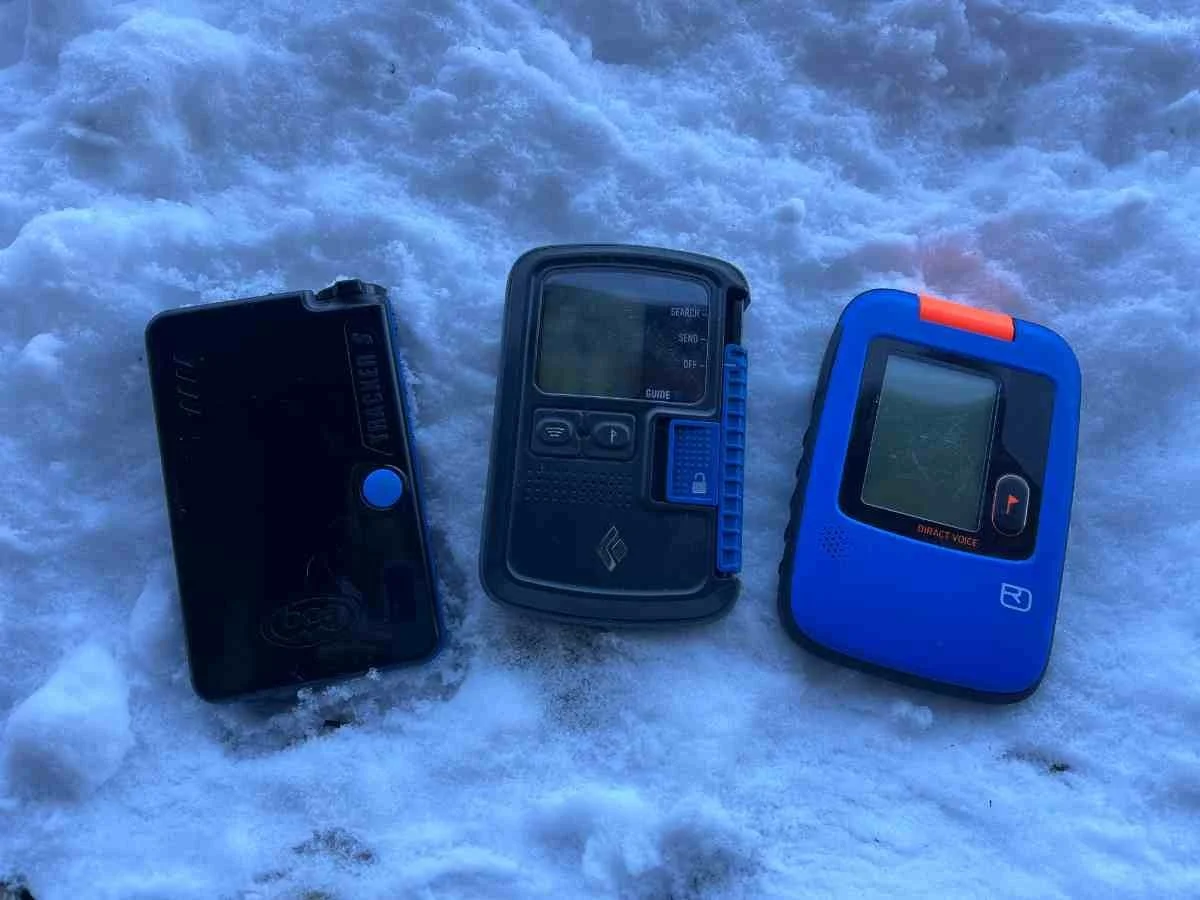
The centerpiece of any avalanche safety gear setup is the transceiver, often called a beacon. In the modern era, the old 1-antenna and 2-antenna models are considered obsolete and dangerous. Today, 3-antenna technology is the global standard because it provides a more stable signal during the fine search bracketing phase, specifically by eliminating the "nulls" and "spikes" that plagued older devices.
When you are looking for specific avalanche beacon features to look for, prioritize a large, intuitive digital display and a reliable marking function. This marking (or flagging) feature is vital for managing multiple burials, allowing you to mute a found signal once the location is confirmed so you can move on to the next victim. It is also important to recognize when to upgrade your avalanche safety equipment; manufacturers generally recommend replacing units every 5 to 7 years. Over time, the internal electronics can suffer from signal drift, or battery corrosion can damage the terminals if they weren't removed during the summer months.
Always perform a group check at the trailhead to ensure every member’s device is transmitting and receiving correctly. Modern transceivers are sophisticated avalanche rescue tools, but they are susceptible to beacon signal interference from cell phones, heated gloves, or magnetic jacket closures. Keep electronics at least 20cm away from your beacon in transmit mode and 50cm away in search mode to ensure maximum accuracy during a crisis.
2. Avalanche Probes: Why 270cm-280cm is the Professional Baseline
Once a transceiver has guided you to the general area of a buried partner, the probe takes over. Its job is to pinpoint the exact location and depth. While carbon fiber probes are enticingly light, many professionals prefer aluminum because it is stiffer and less prone to deflection when striking ice layers or rocks deep in the snowpack. When considering how to choose an avalanche probe for backcountry skiing, length is your most important metric.
A standard 270cm-280cm probe is the baseline for most regions. Shorter probes might save a few grams in your pack, but they often fail to reach victims in deep-pack burial scenarios common in maritime climates. Beyond length, look for a robust quick-lock mechanism. In the high-stress environment of a companion rescue, you need a probe that snaps into place instantly without fumbling with complex knots or fragile wires.
Your probe also serves as a critical measuring tool for snowpack stability assessment. Most modern probes have depth markers etched into the side, which help you gauge the thickness of different layers when you are performing a pit test. Carrying a probe that meets these professional standards is a core part of any essential avalanche gear checklist.
3. High-Volume Metal Shovels: Durability in Debris
Many beginners underestimate the physical toll of moving snow. Avalanche debris is not fluffy powder; it is often as hard as concrete once it stops moving and sets. For this reason, plastic shovels have no place in the backcountry. A high-quality shovel must be made of Aluminum Only—specifically T6 tempered aluminum—to provide the necessary leverage to break through frozen chunks.
An effective shovel for backcountry skiing safety equipment should feature a telescopic shaft and an ergonomic D-grip, which allows for maximum power while wearing heavy mittens. Some advanced models also offer a hoe-mode, where the blade can be fixed at a 90-degree angle to the shaft. This configuration is significantly more efficient for strategic shoveling, a technique where rescuers move snow to the side in a "conveyor belt" fashion rather than lifting it vertically.
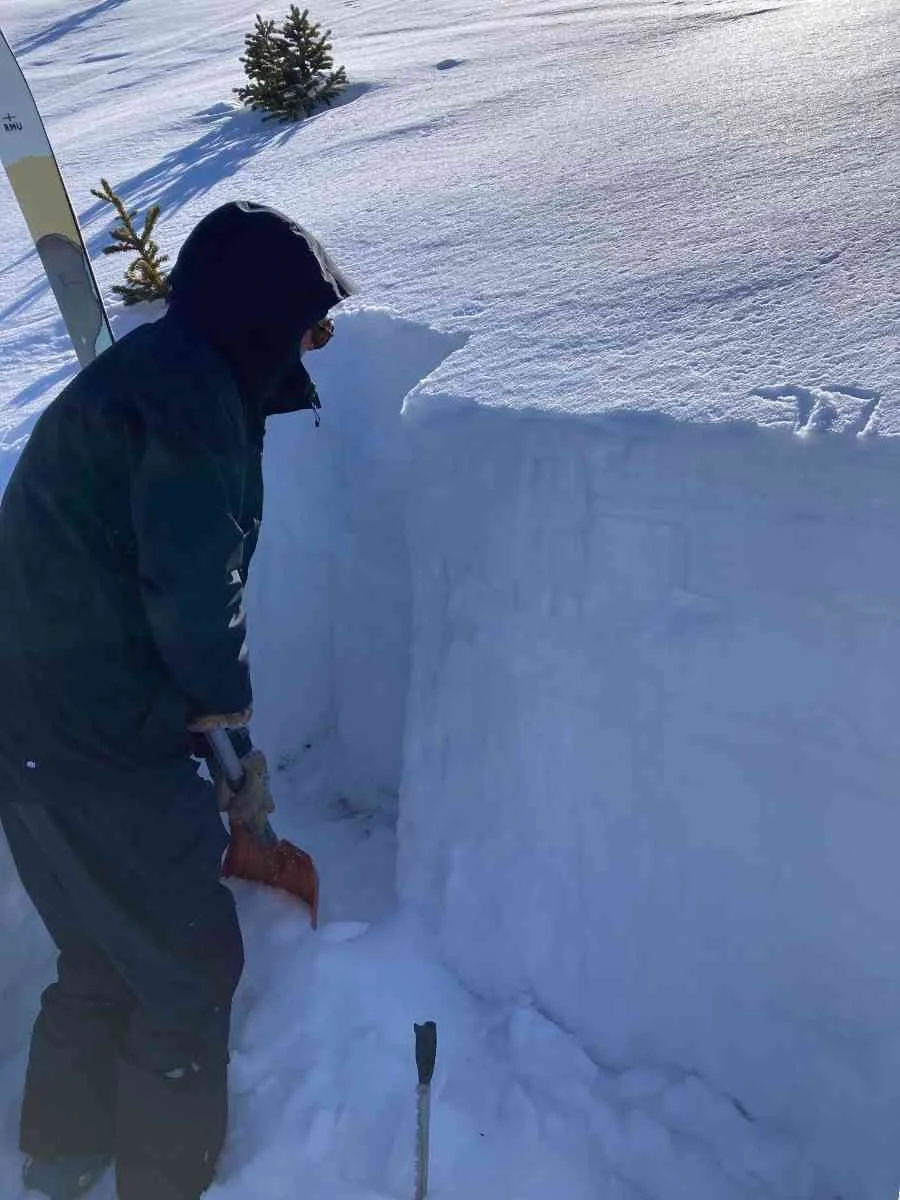
Your shovel is also used throughout the day for preventative measures. Whether you are clearing a flat spot for lunch or digging a profile to check the snowpack stability, a durable metal shovel is your most worked piece of equipment. Using a shovel that can withstand the impact of terrain traps ensures that you won't be left helpless if a rescue becomes necessary.
4. Avalanche Airbags: Compressed Air vs. Electronic Systems
Avalanche airbags are the only piece of avalanche safety gear designed to prevent burial in the first place. The technology relies on a physics principle called inverse segregation, where larger objects remain on top of a moving mass of smaller particles. By essentially making the skier a "larger particle," the airbag helps you stay on the surface of the slide.
When debating compressed air vs electronic avalanche airbags, consider your travel habits and maintenance preferences.
- Compressed Air Systems: These use a refillable canister of nitrogen or air. They are generally lighter and more affordable upfront. However, they require a refill after every deployment, making practice deployments expensive and travel on commercial flights difficult due to TSA regulations.
- Electronic (Fan-Based) Systems: These use high-capacity lithium-ion batteries to power a high-speed fan. While more expensive and slightly heavier, they allow for multiple deployments on a single charge. This encourages you to practice deploying the bag frequently to build muscle memory. They are also much easier to take on airplanes.
Data shows that properly deployed airbags reduce mortality by 11 to 16%, making them a logical addition once you have mastered the use of the big three rescue tools.
5. Prevention Tools: Slope Angle Assessment and Communication
The best rescue is the one that never has to happen. To avoid dangerous terrain, you must be able to recognize it. This is where slope angle assessment becomes critical. Most large-scale avalanches occur on slopes between 30 and 45 degrees, with 38 degrees being the statistical "sweet spot" for slides. Carrying an inclinometer—either as a standalone tool or a feature on your compass—allows you to verify if the terrain you are about to ski is in the danger zone.
Group management is another often-overlooked aspect of safety. High-quality backcountry communication tools for group safety, such as two-way radios, allow team members to stay in contact when spaced out for safety or when visibility drops. Furthermore, a satellite messaging device provides a lifeline for professional rescue help if an accident occurs in an area without cell service.
Before you head out, checking your backcountry skiing safety equipment checklist is vital, but equipment is only effective if you have the knowledge to use it. Pursuing AIARE certifications or local equivalent training will give you the skills to analyze snowpack stability and avoid terrain traps before they become a threat.
FAQ
What are the three essential pieces of avalanche safety gear?
The three non-negotiable items for any backcountry traveler are a digital avalanche transceiver, a collapsible aluminum probe, and a sturdy metal shovel. These tools are used in tandem during a rescue: the transceiver finds the signal, the probe pinpoints the body, and the shovel extracts the victim.
What is the difference between an avalanche beacon and a transceiver?
There is no functional difference; the terms are used interchangeably. Both refer to the device worn on the body that transmits a 457 kHz radio signal while skiing and can be switched to "search mode" to find other signals if someone is buried.
Are avalanche airbags actually effective?
Yes, they are highly effective at keeping a victim near the snow's surface, which is the primary factor in survival. Statistics show that the mortality rate decreases significantly when an airbag is successfully deployed, though they do not guarantee safety in terrain with high physical trauma risks like trees or cliffs.
How do you choose the right length for an avalanche probe?
For most backcountry skiers, a probe between 270cm and 280cm is the recommended standard. This length is sufficient for deep burials while remaining compact enough to fit inside a standard 25-30 liter touring pack. Avoid probes shorter than 240cm unless you are skiing in an area with a very shallow snowpack.
Do avalanche beacons ever expire?
While they don't have a hard expiration date like food, manufacturers and safety organizations recommend replacing them every 5 to 7 years. The plastic housing can degrade, and the internal frequency matching can drift over time, which may make the beacon harder for other devices to find during a search.