Quick Facts
- Regulatory Status: The terms reef safe and reef friendly are not currently defined or regulated by any federal agency like the FDA.
- Effective Ingredients: Evidence-based protection relies on non-nano mineral blockers like zinc oxide and titanium dioxide.
- Environmental Impact: Experts estimate that 6,000 to 14,000 tons of sunscreen enter our oceans annually, predominantly near coral reef systems.
- The Toxic Threshold: Chemical filters like oxybenzone can be toxic to juvenile corals at levels as low as 62 parts per trillion.
- Consumer Verification: The gold standard for authenticity is the Protect Land + Sea certification from the Haereticus Environmental Laboratory.
- Particle Size Importance: Safe mineral particles must be larger than 100 nanometers to ensure they are not absorbed by marine life.
The terms reef safe and reef friendly are not currently regulated by the FDA, meaning labels can be used inconsistently. Generally, reef safe sunscreen refers to mineral-based formulas that use non-nano zinc oxide or titanium dioxide instead of chemical filters. To ensure a product is legitimately safe for marine life, look for the Protect Land + Sea certification from Haereticus Environmental Laboratory (HEL), which involves rigorous scientific testing of both active and inactive ingredients.
Decoding the Labels: Reef Safe vs. Reef Friendly
When you walk down the skincare aisle, the sea of blue and green labels can be incredibly misleading. For the average consumer, terms like ocean-friendly skincare or reef-safe seem like a promise of environmental stewardship. However, it is vital to understand that the terms 'reef safe' and 'reef friendly' are not legally defined or regulated by the U.S. Food and Drug Administration (FDA). This regulatory vacuum allows brands to utilize these labels without standardized testing or specific ecological requirements.
Often, the difference between reef safe and reef friendly sunscreen labels is purely a matter of marketing preference rather than scientific distinction. A product labeled as reef friendly might still contain microplastics or problematic chemical filters like octocrylene, which have been linked to marine toxicity. Without a legal standard, a company can remove one harmful chemical, keep three others, and still apply an eco-friendly sticker to the bottle. As an editor and ecologist, I’ve seen this greenwashing firsthand; it places the entire burden of research on the consumer to verify what is actually happening beneath the waves.
The Ecologist’s Whitelist: Non-Nano Mineral Sunscreen
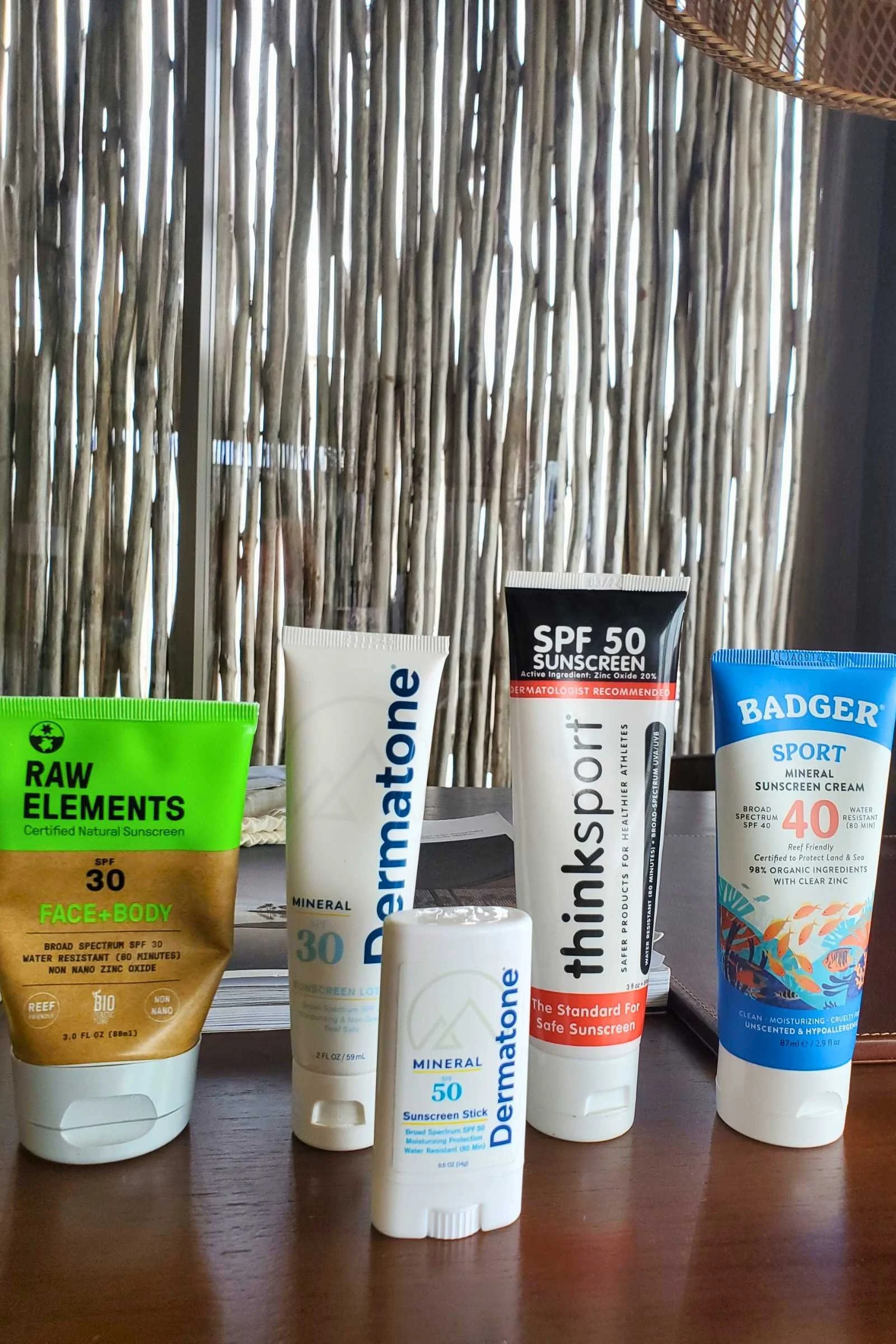
If chemical filters are the problem, modern mineral sunscreen is the solution. These products use physical UV blockers that sit on top of the skin and physically deflect UV rays like a mirror. Both zinc oxide and titanium dioxide are the primary players here. However, not all minerals are created equal. The most critical distinction is between nano and non-nano particles.
A non-nano mineral sunscreen utilizes particles larger than 100 nanometers. This size is significant because nanoparticles smaller than 100 nanometers can be absorbed by coral polyps and other marine organisms, leading to bioaccumulation and endocrine disruption. By staying above this size threshold, the mineral particles remain inert and do not penetrate the delicate tissue of the reef. While zinc oxide is often the preferred choice for providing broader spectrum protection against both UVA and UVB rays, both minerals are considered safer for reefs than chemical UV filters when they are uncoated and non-nano.
One common deterrent for consumers is the white cast often associated with these thicker formulas. Fortunately, the best non-nano mineral sunscreens for face without white cast have evolved through micronized (but still non-nano) technology and tinting. These products provide the necessary barrier for your skin without leaving you looking like a ghost or endangering fragile marine ecosystems.

The “Awful 8” and Hidden Toxins: What to Avoid
To protect coral reefs, avoid sunscreen ingredients known to cause coral bleaching and marine toxicity. The most notorious is oxybenzone, which is so potent that it harms corals at levels equivalent to one drop in six Olympic-sized swimming pools. However, the list of sunscreen ingredients for coral reefs to avoid goes much deeper. We often refer to the Awful 8—a group of chemicals that should trigger an immediate "no" during your shopping trip.
The Blacklist vs. Whitelist
| Category | Ingredients to Avoid (Blacklist) | Ingredients to Use (Whitelist) |
|---|---|---|
| Active Filters | Oxybenzone, Octinoxate, Octisalate, Octocrylene, Homosalate, Avobenzone | Non-nano Zinc Oxide, Non-nano Titanium Dioxide |
| Preservatives | Methylparaben, Butylparaben, Propylparaben | Phenoxyethanol (in low amounts), Sodium Benzoate |
| Additives | Microplastics (Acrylates Copolymer), Phthalates, Triclosan | Plant-based oils, Shea butter, Beeswax |
The Awful 8 includes:
- Oxybenzone (Benzophenone-3)
- Octinoxate (Ethylhexyl Methoxycinnamate)
- Octisalate (Ethylhexyl Salicylate)
- Octocrylene
- Homosalate
- Avobenzone
- Ethylhexyl Dimethyl PABA
- 4-Methylbenzylidene Camphor
Beyond these, truly reef-safe options should also exclude parabens, phthalates, and microplastics like acrylates copolymer. These substances contribute to endocrine disruptors in marine life and hinder the reproductive success of fish and coral alike.

High-Standard Certifications to Trust
Since we cannot rely on the simple reef safe claim, we must look for third-party verification. The most rigorous standard currently available is provided by the Haereticus Environmental Laboratory (HEL). Their Protect Land + Sea certification is not just a branding exercise; it involves intensive scientific lab testing of both active and inactive ingredients to ensure zero marine toxicity.
When you look for a product from the haereticus environmental laboratory certified sunscreen brands list, you are choosing a product that has been vetted against a much stricter standard than what is required by law. These certifications also take into account the delivery method—recommending a non-aerosol spray or cream over traditional aerosols, which can drift onto the sand and wash into the tide, even if the ingredients themselves are mineral-based.
Legal Compliance: Hawaii Act 104 and Beyond
The shift toward safer sun protection isn't just an ethical choice; in many places, it’s the law. Hawaii Act 104 was a landmark piece of legislation that banned the sale and distribution of sunscreens containing oxybenzone and octinoxate. Since then, other regions including Palau, the US Virgin Islands, and Key West have followed suit to protect their marine-protected areas.
As we look toward the future, the standards are only getting tighter. For instance, the reef safe sunscreen brands permitted in hawaii 2026 will likely face even more scrutiny as state officials consider expanding the ban to include a wider range of chemical filters. Using a reef safe sunscreen that is already fully mineral-based ensures that you are compliant with current and future regulations, regardless of where your travels take you.
Top Rated Reef-Safe Brands & Value
| Brand | Active Ingredient | Price per Ounce (Approx.) |
|---|---|---|
| Badger | Non-nano Zinc Oxide (22.5%) | $5.30 |
| Raw Elements | Non-nano Zinc Oxide (23%) | $6.00 |
| Stream2Sea | Non-nano Titanium Dioxide (6.6%) | $6.50 |
| Thinksport | Non-nano Zinc Oxide (20%) | $4.00 |
| Kokua Sun Care | Non-nano Zinc Oxide (25%) | $7.50 |
FAQ
What ingredients make a sunscreen reef-safe?
A truly reef-safe product relies on physical minerals—specifically non-nano zinc oxide or titanium dioxide—to block UV rays. It must also be free from the Awful 8 chemicals, parabens, and microplastics. The absence of these ingredients prevents coral bleaching and endocrine disruption in marine mammals and fish.
Is mineral sunscreen the same as reef-safe sunscreen?
Not necessarily. While most reef-safe sunscreens are mineral, some mineral sunscreens use nano-sized particles (smaller than 100nm) that can still be toxic to marine life. Additionally, a mineral sunscreen might contain harmful preservatives or microplastics that disqualify it from being truly environmentally safe.
How can I tell if a sunscreen is truly reef-safe?
The most reliable method is to ignore the front-label marketing and check the active ingredients list on the back for non-nano zinc oxide or titanium dioxide. Furthermore, look for the Protect Land + Sea seal or check the haereticus environmental laboratory certified sunscreen brands list for third-party verification.
What chemicals should be avoided in reef-safe sunscreen?
You should avoid oxybenzone, octinoxate, octisalate, octocrylene, homosalate, and avobenzone. Additionally, check for parabens like methylparaben and microplastics such as acrylates copolymer, which are frequently used in waterproof formulas but contribute to marine toxicity.
Is titanium dioxide safe for marine life?
Yes, titanium dioxide is considered safe for marine life provided it is in non-nano form and ideally uncoated. Like zinc oxide, it functions as a physical barrier that does not penetrate coral cells, unlike chemical filters that dissolve in the water and trigger coral bleaching even at low concentrations.