The Nantahala River is more than just a scenic run in North Carolina; it is a world-class training ground that has produced 24 Olympians since 1972. Whether you are attempting Nantahala River kayaking for beginners or refining technical lines, the Gorge offers a unique pool-and-drop hydrology perfect for skill building. With the expertise of Olympian Evy Leibfarth, this guide breaks down the essential Bryson City paddling guide secrets, from managing the cold dam-controlled flow to sticking the landing at the legendary Nantahala Falls.
Quick Facts
- Core Experience: An 8.5-mile stretch of dam-controlled Class II-III whitewater.
- Olympic Legacy: Training home to 24 Olympians and gold medalists Joe Jacobi and Scott Strausbaugh.
- Water Temp: A constant 45-50°F year-round, pulled from the bottom of Nantahala Lake.
- Season: Reliable daily flows from mid-March through mid-October.
- Minimum Requirements: Guests must be at least 7 years old and weigh 60+ lbs per US Forest Service regulations.
- The Milestone: The standard run concludes at Nantahala Falls, a iconic Class III drop.
Nantahala River kayaking for beginners typically starts on the 8.5-mile dam-controlled section through the Nantahala Gorge. This reach features Class II whitewater, providing a stable environment for learning river-reading skills, eddy turns, and ferries. Most paddlers progress from stable inflatable duckies or guided rafts to hard-shell kayaks as they gain confidence in navigating the pool-and-drop hydrology.
The Olympian’s Perspective on Nantahala Whitewater
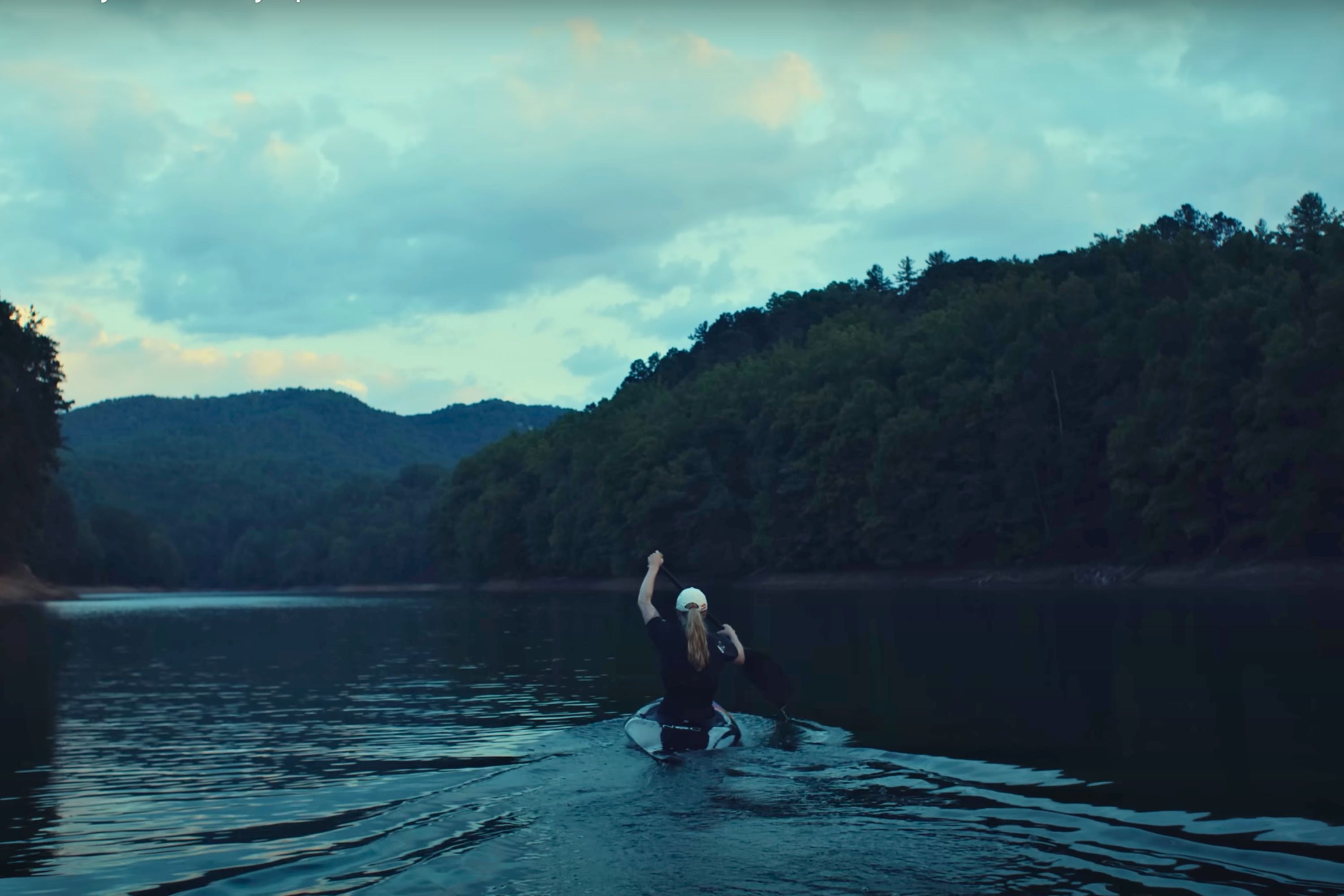
When we talk about the Nantahala, we aren't just talking about a river; we are talking about a legacy. Since whitewater slalom made its debut at the Summer Games, the Nantahala Outdoor Center has been a cornerstone of the American competitive scene. 1992 Olympic gold medalists Joe Jacobi and Scott Strausbaugh honed their craft right here, and they remain the only Americans to win a gold medal in whitewater canoe slalom. This river provides a unique classroom where the water behaves predictably, allowing athletes to focus on the minutiae of their technique.
For those just starting, the Nantahala whitewater progression is one of the most logical paths in the sport. The river is characterized by pool-and-drop hydrology, meaning every rapid is followed by a calm pool of water where you can catch your breath, regroup, and prepare for the next challenge. This "instructional" feel is why so many world-class athletes keep coming back. Olympian Evy Leibfarth’s Nantahala kayaking advice often centers on using these transition zones to visualize the next move. It’s about more than just surviving the rapid; it’s about mastering the move.
The gorge creates a perfect environment for slalom gate training. Even if you aren't aiming for the podium, practicing the same ferry moves and eddy turns that the pros use will accelerate your learning curve. In the upper sections and near the NOC campus, you’ll often see gates suspended over the water. Navigating these teaches you precision—the difference between a clean line and a missed gate is often just a few inches and a well-timed stroke.
Logistics: Bryson City Base Camp and River Timing
Bryson City serves as the ultimate hub for Blue Ridge mountain culture and whitewater kayaking Western NC. It’s a town that breathes the river. When you aren't on the water, you’re likely at a local brewery or outfitter discussing the day's lines. The logistics of paddling here are heavily influenced by the dam-controlled water flow. Unlike many rivers that rely on rainfall, the Nantahala's levels are predictable thanks to the Duke Energy release schedule.
The typical season runs from mid-March through mid-October. During this time, the water is released from the base of the Nantahala Lake dam, ensuring that the popular rafting section spans approximately eight miles of consistent flow. This predictability is a godsend for anyone planning a trip. You don't have to guess if the river will be "up"; you just check the Nantahala River kayaking water release schedule tips and plan your launch accordingly.
For most paddlers, the journey begins at the put-in near Wayah Road. From here, you have roughly three hours of Class II water ahead of you before reaching the final challenge. This section is the heart of the Bryson City paddling guide experience. It allows for a slow warm-up, giving you plenty of time to get used to the cold water and the rhythm of the river before the intensity picks up.
Mastering the Lines: From Class II Drills to The Falls
True Nantahala whitewater progression requires moving beyond just "floating" through the rapids. We encourage learners to treat every rock as a coaching opportunity. Take Patton’s Run, one of the first significant rapids you’ll encounter. Most recreational boaters take the "Trad Line"—straight down the middle. However, the "Race Line" involves catching the small, tight eddies on river right. This is where you practice the technical precision required for higher-class water.
As you move downstream, look for Billboard Rock. This is a massive, flat-faced boulder that creates a significant eddy. It is the premier spot for practicing eddy turns and ferries.
- The Ferry: Start in the eddy behind Billboard Rock, angle your bow at 45 degrees toward the opposite bank, and use a strong forward stroke to glide across the current without losing downstream momentum.
- The Eddy Turn: Practice entering and exiting the "Truck Stop eddy" just downstream. It’s large enough to hold several boats and serves as a perfect classroom for learning how to use the "edge" of your kayak to snap into still water.
The climax of the trip is undoubtedly the Class III Nantahala Falls. For many, this is the ultimate milestone. How to navigate Nantahala Falls in a kayak depends on your confidence level. The most common route is the "Ledge Line" on river right, which requires a clean drop over a small ledge followed by a sharp turn to avoid the rocks at the bottom. Getting this right feels like a rite of passage. If you can stick the landing at the Falls, you’ve officially graduated from the Class II basics of the Gorge.
Pro Tip: Evy Leibfarth’s Line Advice "Don't just look at the waves; look at the tongues of green water. On the Nantahala, the 'green water' is your friend—it indicates the deepest, fastest part of the current. If you can keep your bow pointed down the center of those green tongues, the river will do half the work for you."
Gear and Safety: Surviving the 45-Degree Flow
One thing that surprises every first-timer is the temperature. Even in the heat of a North Carolina July, the water remains a brisk 45 to 50 degrees Fahrenheit. Because the water is pulled from the bottom of Nantahala Lake (some 250 feet deep), it never warms up. This makes proper gear non-negotiable for anyone attempting whitewater kayaking Western NC.
| Gear Item | Importance | Recommendation |
|---|---|---|
| Wetsuit/Drytop | Critical | A 3mm neoprene wetsuit or a breathable drytop prevents hypothermia. |
| PFD (Life Jacket) | Mandatory | Must be a Type III or V USCG-approved vest that fits snugly. |
| Helmet | Mandatory | Essential for protecting against submerged rocks during a swim. |
| Spray Skirt | Optional/Advanced | Necessary for hard-shell kayaks to keep the cockpit dry. |
| Footwear | Critical | Neoprene booties or water shoes with thick soles to prevent injury. |
The primary safety concern on the Nantahala, aside from the cold, is the risk of foot entrapment. The river bed is rocky and uneven.
SAFETY ALERT: Foot Entrapment & Swimming If you fall out of your boat, never attempt to stand up in moving water. Your foot can become wedged between rocks, and the force of the current can push you under. Always adopt the "nose and toes" position: float on your back with your feet pointing downstream and kept near the surface until you reach a calm pool or the shore.
For those using hard-shell performance kayaks, mastering the wet exit and self-rescue is a prerequisite. Before you head into the Gorge, ensure you can calmly tuck, pull your skirt, and exit the boat while submerged. It’s a basic skill that builds the confidence needed to tackle the more technical sections of the river.
Advanced Training: Upper Nantahala and The Cascades
Once you have mastered the 8.5-mile lower section, the Nantahala whitewater progression from Class II to III leads naturally to the Upper Nantahala. This area is only accessible during specific bypass releases, which occur roughly eight days a year. The Upper Nantahala offers a much tighter, more technical experience with Class III and III+ rapids that require fast moves and precise boat control.
For the truly elite, the Cascades represent the pinnacle of Nantahala Gorge geography. This Class IV+ section is where you’ll find the steepest drops and most punishing holes. It is a world-class training ground for expert kayaking on the Upper Nantahala and Cascades. Even if you aren't ready to paddle it yet, walking the banks during a release day to watch the experts take their lines is an education in itself.
The area around the Nantahala Outdoor Center also features world-class slalom gates. This is where you can refine your technical whitewater lines under the same conditions as Olympic hopefuls. Practicing here allows you to bridge the gap between recreational paddling and competitive sport, making the Nantahala a truly versatile destination for any skill level.
FAQ
Is the Nantahala River good for beginner kayakers?
The Nantahala is considered one of the best rivers in the country for beginner kayakers. The pool-and-drop nature of the rapids ensures that there is always a calm spot to recover after a challenge. Beginners usually start in inflatable kayaks (duckies) before moving to hard-shell boats as their skills improve.
What class are the rapids on the Nantahala River?
The main recreational section of the river is primarily Class II whitewater. The trip concludes with Nantahala Falls, which is a Class III rapid. On specific release days, the Upper Nantahala offers Class III+ water, and the Cascades reach Class IV-V.
What is the water temperature of the Nantahala River?
The water temperature stays between 45 and 50 degrees Fahrenheit throughout the year. Because the water comes from the depths of Nantahala Lake, it does not warm up with the air temperature, making thermal protection like wetsuits or drytops highly recommended even in summer.
What should I wear for kayaking on the Nantahala?
Assuming the air is warm, a minimum of a swimsuit and a synthetic T-shirt is required, but a wetsuit or splash jacket is highly recommended due to the cold water. Avoid cotton, as it stays wet and saps body heat. Always wear sturdy water shoes or booties, a helmet, and a PFD.
Is the Nantahala Falls rapid dangerous for kayakers?
Nantahala Falls is a Class III rapid that requires a specific line to navigate safely. While it is a significant step up from the rest of the river, it is a standard part of the run for intermediate paddlers. Most "swims" in the Falls result in a bumpy ride into the large pool below rather than serious injury, provided the paddler follows proper safety protocols.