Quick Facts
- Top Overall: AeroPress Go for the perfect balance of portability and rich flavor extraction.
- Best for Groups: Stainless steel percolators that serve 8-12 cups and withstand high heat.
- Lightest Weight: DIY coffee bags weighing only 0.3 oz per serving for the minimalists.
- Budget Pick: Collapsible silicone pour-over drippers available for around $13.
- Market Insight: Manual coffee makers, including portable devices like the AeroPress and Moka pots, account for 58.3% of global sales in the travel market as of 2025.
- Growth Trend: The global camping coffee maker market reached $2.14 billion in 2024 and is projected to hit $3.89 billion by 2033.
Finding the best camp coffee doesn't mean compromising on flavor just because you're off the grid. Whether you are in a backcountry brewing spot or a basecamp kitchen, knowing how to make coffee while camping effectively is key. To brew coffee while camping, select a method that balances flavor with portability. Popular options include the AeroPress for rich flavor, pour-over drippers for precision, and French presses for simplicity. For a minimalist approach, cowboy coffee involves boiling grounds directly in a pot, while instant coffee or DIY steeping bags offer the lightest weight and easiest cleanup for backpackers.
Quick Reference Comparison Table
| Method | Weight | Best For | Cleanup Difficulty |
|---|---|---|---|
| Cowboy Coffee | 0 oz (No gear) | Rugged Minimalists | Moderate |
| Pour-Over | 2-4 oz | Precision & Ease | Easy |
| AeroPress | 6.4-11.5 oz | Flavor Enthusiasts | Very Easy |
| French Press | 15-30 oz | Basecamp/Groups | Moderate |
| Percolator | 24-40 oz | Large Groups | Moderate |
| Moka Pot | 12-20 oz | Espresso Lovers | Easy |
| DIY Bags | 0.3 oz | Ultralight Hikers | Very Easy |
1. Cowboy Coffee: The Rugged Minimalist Choice
There is something timeless about brewing coffee directly in a pot over an open flame. This is the ultimate zero-gear method, requiring nothing more than a pot, water, and your favorite coffee grounds. While it has a reputation for being gritty, how to make cowboy coffee for camping properly is an art form that relies on immersion brewing and a few specific physics tricks.
To avoid a mouthful of silt, don't let the water reach a rolling boil once the grounds are in. Keep it at a simmer. Once the coffee has steeped for about four minutes, the secret is to add a splash of cold water or a few crushed eggshells. The temperature shock or the weight of the shells helps the coffee grounds settle to the bottom of the pot, allowing you to pour a relatively clean cup. It is the most authentic way to make coffee while camping when you want to feel connected to the history of the trail.
Spec Box: Cowboy Coffee
- Weight: 0 oz (uses existing cook pot)
- Serving Capacity: Limited only by your pot size
- Cleanup Difficulty: Moderate (requires straining or careful disposal of loose grounds)
2. Pour-Over: Precision in the Wild
For many enthusiasts, pour-over systems represent the gold standard of portable coffee brewing methods. In fact, these systems account for 28.5% of the global camping coffee maker market share as of 2025. The appeal lies in the control you have over the extraction profile. Whether you choose a foldable silicone dripper or a ultralight titanium frame, the process remains consistent.
The key to a great camp pour-over is the bloom. Pour just enough water over the grounds to dampen them and wait 30 to 45 seconds. This allows CO2 to escape, ensuring a more even extraction. Because it uses easy-to-pack paper filters, this is often cited as the best camp coffee method for those who value a clean, sediment-free cup and a trail-ready setup that fits in a side pocket. It is frequently considered one of the best lightweight coffee brewing methods for hikers who aren't willing to sacrifice quality for ounces.
Spec Box: Pour-Over
- Weight: 0.5 - 4 oz
- Serving Capacity: 1 cup at a time
- Cleanup Difficulty: Easy (toss the filter and grounds)
3. AeroPress: The Backpacker’s Gold Standard
If you talk to any thru-hiker about camping coffee gear, the AeroPress will inevitably come up. It is a versatile tool that can produce anything from a concentrated shot to a standard American-style brew. When debating aeropress vs french press for camping, the AeroPress almost always wins on the cleanup front. You simply "plunge" the puck of used grounds directly into a trash bag, leaving the device nearly spotless.
The AeroPress Go is specifically designed for travel, weighing in at about 11.5 oz and packing down into its own drinking mug. It uses a combination of immersion and pressure, which results in a rich flavor profile with very low acidity. For anyone looking for lightweight coffee brewing methods for hikers that provide a café-quality experience at 10,000 feet, this is the tool. The durable plastic construction also means you never have to worry about glass breaking in your pack during backcountry brewing.
Spec Box: AeroPress Go
- Weight: 11.5 oz (including mug)
- Serving Capacity: 1-2 cups
- Cleanup Difficulty: Very Easy
4. French Press: The Basecamp Mainstay
The French press is a classic choice for low mess coffee brewing for car camping. It provides a full-bodied cup thanks to the immersion brewing process, which allows the natural oils of the coffee to remain in the brew. However, traditional glass presses are a liability in the outdoors. For a successful basecamp kitchen, look for a double-walled stainless steel carafe.
To get the most out of your French press, maintain a strict 1:16 water-to-coffee ratio. Coarsely ground beans work best here to prevent the mesh filter from clogging. When considering aeropress vs french press for camping, remember that the French press is better suited for a relaxed morning where you aren't rushing to break down camp, as it requires a bit more water for a thorough cleanup.
Spec Box: French Press
- Weight: 15 - 30 oz
- Serving Capacity: 2-4 cups
- Cleanup Difficulty: Moderate (requires rinsing out the mesh and carafe)
5. The Percolator: Brewing for the Whole Crowd
When you are camping with a large group of friends or family, making individual pour-overs is a chore. This is where the percolator shines. It is often the best way to brew coffee for a group of campers because it can produce up to 12 cups in a single cycle on a standard camp stove.
Percolators work by continuously cycling boiling water through the grounds. While this can result in a very strong (and sometimes "burnt") flavor if left too long, many campers love the nostalgic "perking" sound and the piping hot temperature it provides. It is a durable piece of equipment that can sit directly on a grate over a campfire or on a high-output burner.
Spec Box: Coffee Percolator
- Weight: 24 - 40 oz
- Serving Capacity: 8-12 cups
- Cleanup Difficulty: Moderate
6. Moka Pot: Espresso-Style Adventure
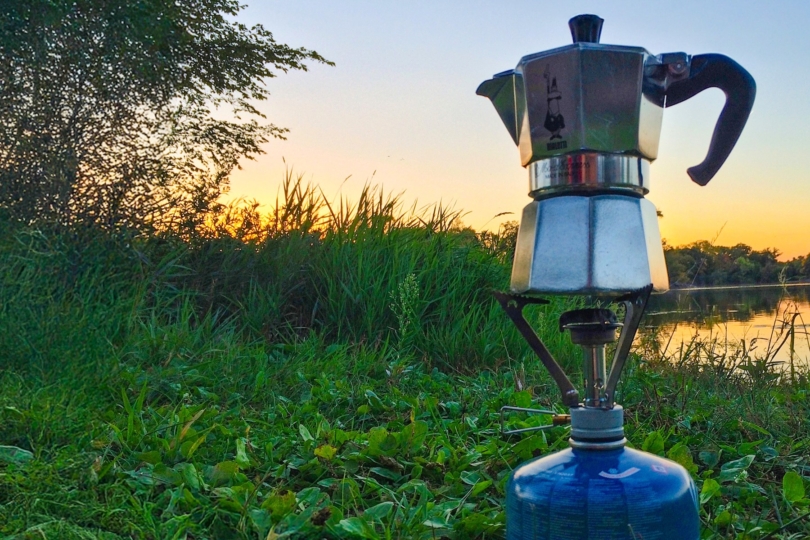
If you can’t start your day without a shot of espresso, the Moka pot is your best friend. It uses steam pressure to force water through coffee grounds, creating a concentrated and intense extraction profile. While not technically 9-bar espresso, it is the closest you can get without lugging a heavy machine into the woods.
When learning how to make espresso style coffee at a campsite, pay attention to the heat source. Modern aluminum Moka pots may not work on induction camp hobs, so ensure your stove is compatible. Using a manual burr mill to grind your beans fresh just before brewing will significantly improve the crema and aroma of your Moka pot coffee.
Spec Box: Moka Pot
- Weight: 12 - 20 oz
- Serving Capacity: 1-6 "espresso" shots
- Cleanup Difficulty: Easy
7. DIY Coffee Bags: The Ultralight Hack
For those asking how do you make coffee camping without a coffee maker, the DIY coffee bag is the ultimate solution. This involves placing grounds into a paper coffee filter, tying it shut with unscented dental floss, and steeping it in boiling water like a tea bag.
This is consistently ranked among the best lightweight coffee brewing methods for hikers because the equipment weight is virtually zero. You simply need your water-to-coffee ratio dialed in before you leave home. This trail-ready method is much more flavorful than traditional instant coffee while maintaining the same level of convenience.
Spec Box: DIY Coffee Bags
- Weight: 0.3 oz per bag
- Serving Capacity: 1 cup per bag
- Cleanup Difficulty: Very Easy
Master the Logistics: Freshness and Cleanup
The secret to why your camp coffee might taste better than your home brew isn't just the mountain air; it's the attention to camping coffee gear essentials. One of the biggest mistakes campers make is pre-grinding their beans days in advance. Pre-ground coffee can lose a significant portion of its aromatic oils within hours of being ground. To prevent this, invest in a portable hand-crank burr mill. This allows you to achieve a consistent extraction profile whether you need a coarse grind for a French press or a fine grind for a Moka pot.
Beyond the flavor, environmental responsibility is paramount. Following Leave No Trace principles means you must pack out everything you pack in—and that includes your coffee grounds. Used grounds are nitrogen-rich and can disturb local soil pH and wildlife if dumped at a campsite. Always carry a small "scraps" bags for used filters and grounds to keep our wilderness pristine.
Essential camping coffee gear should also include a high-quality vacuum-insulated mug. Even the best camp coffee becomes unpalatable if it goes cold in the brisk morning air before you can finish it. With the right gear and a little bit of technique, your campsite can easily rival your favorite local café.
FAQ
What is the best way to make coffee while camping?
The best way depends on your priorities. If you want the best flavor and easy cleanup, the AeroPress is generally considered the top choice. For those traveling in large groups, a large stainless steel percolator is more efficient. If weight is the only concern for a backpacker, DIY coffee bags or high-quality instant coffee are the most practical options.
Is instant coffee or ground coffee better for camping?
Ground coffee provides a superior flavor profile and a more rewarding ritual, but it requires brewing equipment and generates waste (grounds). Instant coffee is significantly lighter and easier to prepare—requiring only hot water—making it a favorite for ultralight backpackers or those on high-mileage trips where time is limited.
How do you make coffee camping without a coffee maker?
You can use the cowboy coffee method by simmering grounds directly in a pot and settling them with cold water. Alternatively, you can create DIY coffee bags by wrapping grounds in a filter and tying them with string, or use the "mud coffee" method where finely ground coffee is mixed with water and allowed to settle at the bottom of the cup.
Is an Aeropress good for backpacking?
Yes, it is one of the most popular tools for backpacking. While it is heavier than instant coffee, the AeroPress Go is designed to be compact and durable. Its ability to produce high-quality coffee with almost zero cleanup makes it worth the weight for many hikers who prioritize a good morning cup.
What are the lightest coffee brewing options for hikers?
The lightest options are high-end instant coffee packets or DIY coffee bags made from filters and string. If you prefer a brewing device, a collapsible silicone pour-over dripper or a titanium "coffee wire" frame are the lightest hardware options, often weighing less than 2 ounces.