Our Top Picks
- Best for Beginners: Sea to Summit Pro — Unbeatable simplicity with a robust design that handles the learning curve of hammock camping with ease.
- Best for Cold Weather: Hennessy 4Season Expedition — A complete shelter system engineered to keep you warm and dry when the mercury drops.
- Best for Thru-Hikers: Kammok Roo Single Ultralight — Exceptional weight-to-strength ratio for those counting every gram on the trail.
- Best for Side Sleepers: Warbonnet Ridgerunner — A bridge hammock that eliminates the banana curve and provides a flat, sprawling sleep surface.
- Best Modular System: Dutchware Chameleon — A highly customizable rig that adapts to any environment, season, or personal preference.
The best camping hammocks for 2024 include the Sea to Summit Pro for ease of use, the Hennessy 4Season for cold-weather backpacking, and the Kammok Roo Single Ultralight for weight-conscious hikers. For sleepers who prefer a flat surface, the Warbonnet Ridgerunner uses spreader bars to accommodate side sleeping, while the Dutchware Chameleon offers a modular design adaptable to different environments and seasons. Finding your ideal setup means balancing the denier scale of the fabric against its total weight while ensuring the system includes tree-friendly straps and proper insulation.
The Shift: Why Campers are Ditching Tents for Hammocks
Ditching your tent for a hammock can transform your sleep quality in the backcountry. After testing the market's top options, we've identified the best camping hammocks for 2024. These lightweight backpacking hammocks offer superior comfort and modular setups for various terrains. Whether you are a beginner or a thru-hiker, finding the right system is key to staying dry and warm.
We are seeing a massive shift in how people approach the outdoors. The global hammock market was valued at approximately USD 387.2 million in 2023 and is projected to reach USD 649 million by 2033. This growth is driven by a desire for more versatile and portable sleep systems. Interestingly, North America accounted for the largest share of this growth in 2024, representing 28.5% of the market value with a valuation of roughly USD 110.35 million.
The appeal is simple: versatility. In rocky, sloped, or saturated environments where a level tent site is impossible to find, a hammock only requires two sturdy trees. However, this shift comes with a responsibility to practice Leave No Trace principles. Using wide tree-friendly straps is no longer optional; it is a necessity to prevent damage to the tree's cambium layer. By elevating your campsite, you reduce your footprint on the forest floor and gain a perspective on the wilderness that no tent can offer.
1. Sea to Summit Pro: The Best for Beginners
If you are new to the world of hanging, the Sea to Summit Pro is the gold standard for accessibility. It removes the intimidation factor often associated with complex knots or fussy hardware. We found that the integrated hammock suspension systems provided by Sea to Summit are among the most intuitive on the market, allowing for a 60-second setup that is perfect for those transition days where you arrive at camp exhausted.
The Details
- Weight: 12.7 oz (Hammock only)
- Material: 70D ripstop nylon
- Price: $85.00 - $100.00
- Best for: Casual campers and beginners
What makes this our top choice for best camping hammocks for beginners is the fabric. While many high-end models use thin 20D or 30D fabrics, the Sea to Summit Pro utilizes a heavy-duty 70D ripstop nylon. This higher denier rating provides a sense of security and durability that helps beginners feel stable. During our testing, the measured weight was within 0.2 ounces of the claimed weight, a rarity in an industry where manufacturers often omit the weight of the stuff sack or end loops.
Pros
- Simplified plated steel buckles for easy adjustment.
- Breathable fabric that prevents the "clammy" feel of cheaper nylon.
- Highly packable, compressing down to the size of a large grapefruit.
Cons
- Suspension straps are often sold separately, which adds to the total cost.
- The 70D fabric is heavier than ultralight alternatives.

2. Hennessy 4Season Expedition: The Cold-Weather Choice
One of the biggest misconceptions about hammock camping is that it is only a summer activity. The Hennessy 4Season Expedition is designed to prove that wrong. This is a comprehensive shelter system that treats the hammock as one component of a larger winter hammock camping sleep systems strategy. It features a double-bottom construction designed to hold a radiant heat-reflecting pad or a closed-cell foam pad, ensuring you don't lose body heat to the air moving beneath you.
The Details
- Weight: 5 lbs 10 oz (Complete system)
- Material: 70D nylon / 30D high-tenacity silnylon
- Price: $260.00 - $300.00
- Best for: Winter camping and extreme conditions
During our field testing in freezing temperatures, the integrated bug net and oversized rainfly coverage provided exceptional protection from wind and snow. The asymmetrical design of the Hennessy allows for a flatter diagonal lie, which is essential for a deep sleep. While it is significantly heavier than other models, you have to consider that this package replaces your tent, your groundsheet, and your bug protection in one go.
Pros
- Exceptional thermal retention when used with the included heat-reflecting pad.
- Includes a structural ridgeline for a consistent hang every time.
- Burly construction that can withstand heavy winds.
Cons
- High weight penalty for hikers focusing on speed.
- The "bottom-entry" Velcro models can be awkward for beginners.
3. Kammok Roo Single Ultralight: The Thru-Hiker's Pick
For the thru-hiker where every ounce is a burden, the Kammok Roo Single Ultralight is a masterpiece of material science. Some specialized lightweight backpacking hammocks command price premiums of 30% to 45% compared to entry-level models, and once you feel the 20D Gravitas fabric Kammok uses, you understand why. This fabric is incredibly soft yet rated to hold up to 300 pounds.
The Details
- Weight: 5.6 oz
- Material: 20D Gravitas ripstop nylon
- Price: $85.00 - $95.00
- Best for: Ultralight thru-hiking
This hammock is about minimalism. It doesn't come with bells and whistles; it comes with performance. The small pack size means it can disappear into the corner of a 40-liter pack. However, the use of low denier nylon means you must be careful with sharp objects. Punctures are more likely on 20D fabric than on the beefy 70D found in the Sea to Summit. We recommend pairing this with lightweight hammock suspension systems to keep the total kit under 10 ounces.
Pros
- The lightest high-performance hammock in our 2024 lineup.
- Dries incredibly fast after a rainstorm.
- Reinforced stress points for added longevity.
Cons
- Prone to "shoulder squeeze" for broader campers.
- The thin fabric can be translucent under bright light.
4. Warbonnet Ridgerunner: The Solution for Side Sleepers
If you find that the traditional gathered-end design makes you feel like a banana, the Warbonnet Ridgerunner is the answer. This is a bridge hammock, which uses spreader bars at the head and foot to create a rectangular sleep area. It is widely considered the best camping hammocks for side sleepers because the fabric remains taut and flat rather than bunching around your shoulders.
The Details
- Weight: 27 oz (Without bars or suspension)
- Material: 30D or 70D nylon options
- Price: $200.00 - $230.00
- Best for: Tent-sleepers and side sleepers
The Ridgerunner features external storage pockets (saddlebags) that hang outside the hammock, solving the common problem of where to put your headlamp and water bottle at night. We particularly loved the view from this hammock; because there are no high side walls of fabric, you get a panoramic view of your surroundings. It is a luxurious setup that bridges the gap between traditional tent camping and the hammock world.
Pros
- True flat-lay capability.
- Integrated bug net with a "stowable" option.
- Excellent storage solutions for better camp organization.
Cons
- Requires a wider "window" between trees because of the spreader bars.
- The metal bars add bulk to your pack.
5. Dutchware Chameleon: The Modular King
For the gear junkie who wants to tinker with their setup, the Dutchware Chameleon is unparalleled. This hammock is built on a modular philosophy where you can zip on different mosquito nets, winter covers, or double camping hammocks for extra comfort accessories. It is one of the premier lightweight backpacking hammocks with mosquito nets that can be completely removed when the bugs disappear in the fall.
The Details
- Weight: Varies by configuration (approx. 15-20 oz)
- Material: Hexon 1.6 or 1.0 fabric
- Price: $140.00+ (Highly dependent on options)
- Best for: Customization and multi-season use
What we didn't like about the Chameleon is the complexity for a novice. There are so many zippers and attachment points that it can be overwhelming. However, for the experienced gearhead, the ability to switch from a light 20D summer setup to a fully enclosed winter rig in minutes is a game-changer. The fabric choice, particularly the Hexon range, offers a unique "cotton-like" feel that reduces the static and slipperiness often found in synthetic hammocks.
Pros
- Fully reversible and adaptable design.
- Proprietary hardware like the Beetle Buckle makes adjustments effortless.
- High-end fabric options that prevent stretching over time.
Cons
- Expensive once you start adding all the modular components.
- Steep learning curve to master the various configurations.
Buyer’s Guide: Material Science & Essential Accessories
Choosing from the best camping hammocks requires an understanding of technical specifications that manufacturers often bury in the fine print. The most important metric is the denier scale. A 20D fabric is feather-light and perfect for a thru-hiker, but a 70D fabric offers the puncture resistance needed for car camping or trips with the family dog.
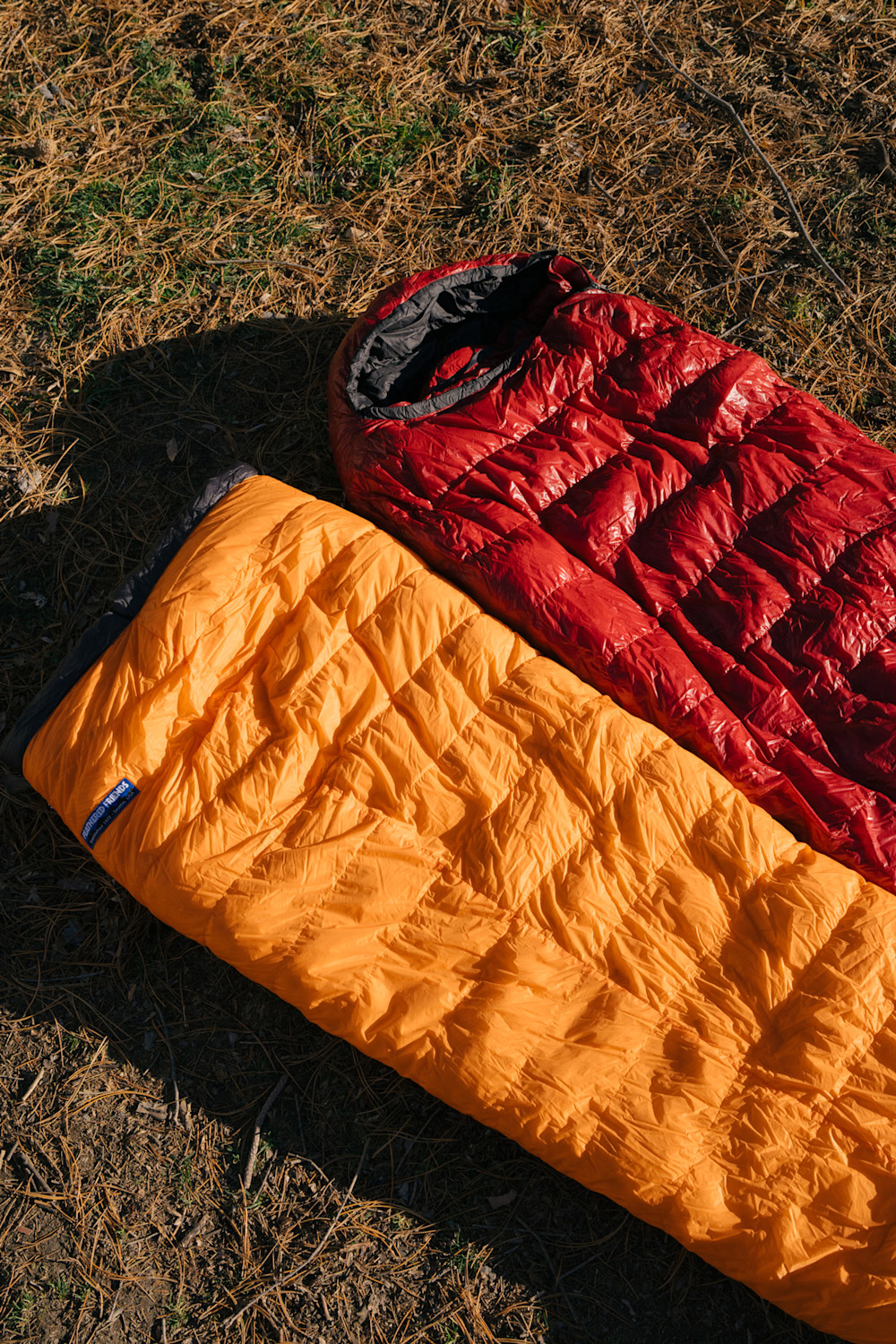
Beyond the hammock itself, your suspension and insulation will dictate your comfort. To maintain ecological safety, always use tree-friendly straps made of wide webbing. Narrow ropes can cut into the bark, potentially killing the tree. For insulation, remember that even a 60-degree night can feel cold in a hammock due to convective cooling. To stay warm, you need underquilts, which are insulated blankets that hang outside the hammock. Unlike a sleeping bag, which loses its loft when you lay on it, an underquilt stays fluffy and traps air beneath you.

Finally, mastering the diagonal lie is the secret to a good night's sleep. Instead of lying in a straight line from tree to tree, you should position your body at roughly a 30-degree angle to the centerline. This flattens the fabric and prevents your back from arching. Most high-quality gathered-end hammocks are at least 11 feet long to provide enough space for this ergonomic position.
FAQ
Are camping hammocks better than tents?
Whether a hammock is better than a tent depends on your environment and sleep preference. Hammocks offer superior comfort on uneven or wet ground and generally provide better airflow in hot climates. However, tents are better suited for treeless environments like alpine tundras or deserts and offer more interior space for changing clothes or storing gear.
What should I look for when buying a camping hammock?
Prioritize the hammock length, fabric denier, and the inclusion of easy to set up hammock suspension systems. Look for a hammock that is at least 11 feet long for a flat sleep and check if it includes a bug net and rainfly coverage, as these are often sold separately but are essential for backcountry use.
Is it actually comfortable to sleep in a hammock?
Yes, for many people, hammocks provide a deeper sleep than sleeping pads on the ground. By using a diagonal lie, you can achieve a nearly flat surface that eliminates pressure points on your hips and shoulders, which is a common complaint for ground sleepers.
Do you need a sleeping pad for hammock camping?
You need some form of bottom insulation. While a sleeping pad can work, especially in double-bottom hammocks, it often slides around. Most dedicated hammock campers prefer underquilts because they provide more consistent warmth and don't interfere with the hammock's ability to contour to your body.
Are hammocks bad for your back?
On the contrary, many people find hammocks beneficial for back pain. A properly hung hammock with a structural ridgeline provides a supportive curve that can relieve pressure on the lower back. However, if the hammock is hung too tight, it can cause "shoulder squeeze," which may lead to discomfort.
Is hammock camping colder than tent camping?
Hammock camping is prone to CBS, or Cold Butt Syndrome, because the air circulates under you. However, with the right hammock camping accessories like a high-quality underquilt or a radiant pad, you can remain just as warm as you would be in a tent.