Quick Facts
- The 1/4-Mile Rule: If your camp destination is more than 0.25 miles from your vehicle, choose a backpacking stove.
- Standard Power: Backpacking stoves offer 8,000 to 12,000 BTUs, while car camping stoves provide 10,000 to 20,000 BTUs per burner.
- Fuel Choice: Propane is king for car camping convenience; use white gas if you are heading into sub-zero temperatures.
- Group Size: A standard two-burner setup serves 4 people; for 8 or more, you will need multiple stoves or a three-burner freestanding model.
- Weight Profile: Backpacking units weigh between 2 and 6 ounces, whereas basecamp models can exceed 30 pounds.
If you are currently choosing between car camping and backpacking stoves, the decision rests on your distance from the vehicle. Car camping stoves are for proximity to vehicles, while backpacking stoves prioritize packability for the backcountry. Car camping stoves are designed for vehicle proximity with large cooking surfaces and multiple burners, whereas backpacking stoves are ultralight, compact, and optimized for packability and boiling water in the backcountry. This camping stove guide will break down the technical specifications and field performance to ensure you make the right investment.
Feature Comparison At-A-Glance
| Feature | Car Camping Stove | Backpacking Stove |
|---|---|---|
| Best Utility | Gourmet outdoor cooking | Boiling water & simple meals |
| Heat Output | 10,000 - 20,000 BTUs | 8,000 - 12,000 BTUs |
| Weight | 10 to 35 lbs | 2 to 6 oz |
| Common Fuel | Propane | Isobutane-Propane |
| Surface Area | Wide enough for cast iron | Limited to small pots |
Car Camping Stoves: The Basecamp Kitchen
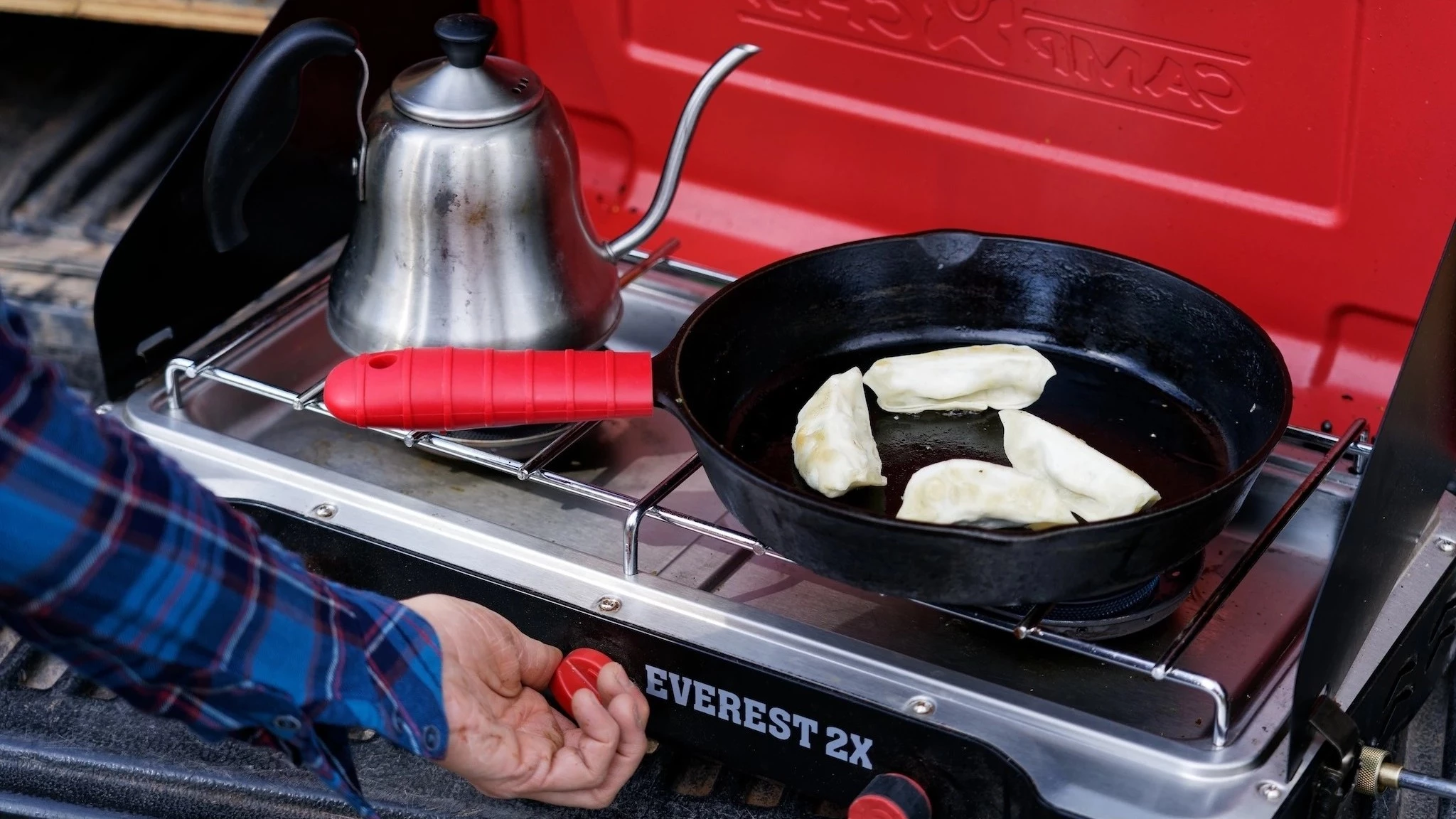
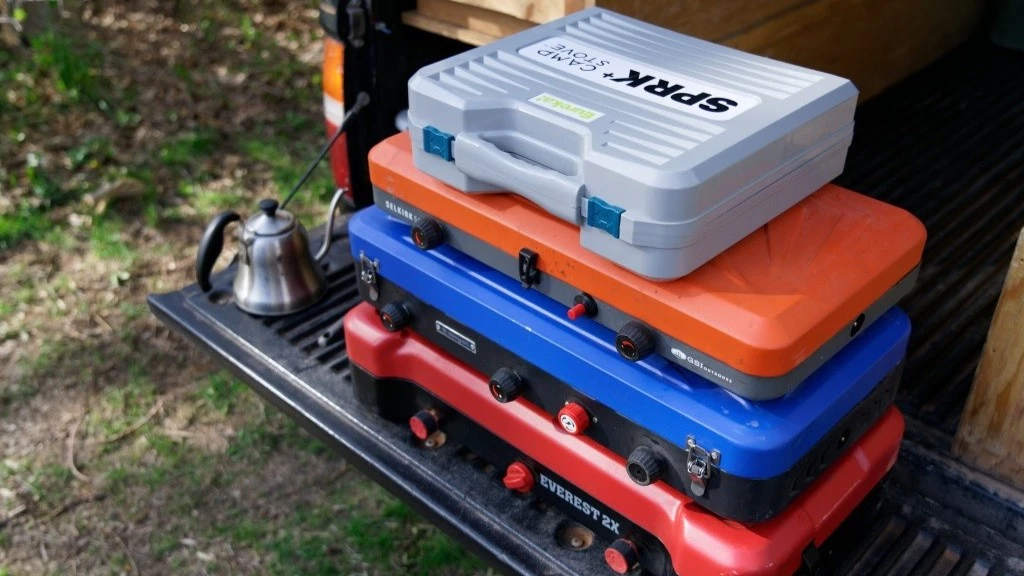
When you aren't carrying your kitchen on your back, the priorities shift from weight savings to culinary versatility. Car camping stoves essentially function as a portable version of your kitchen range. They are built with heavy-duty construction to handle the weight of cast iron compatibility, allowing you to sear steaks or cook large batches of pancakes with even heat distribution.
The gold standard for most weekend warriors is the two-burner setup. This allows you to multitask, boiling water for coffee on one side while frying eggs on the other. However, if you are looking for the best camping stove for large groups 8 plus, a standard tabletop unit may fall short. For larger crowds, I recommend a three-burner freestanding stove with its own legs. These models provide a massive cooking surface that can accommodate heavy stockpots and large woks. If a massive freestanding unit is too bulky for your trunk, pairing a tabletop two-burner setup with a secondary single-burner or a backpacking stove is an excellent way to increase your output without sacrificing too much cargo space.
Performance in this category is often measured in BTUs (British Thermal Units). While backpacking canister stoves generally offer a heat output between 8,000 and 12,000 BTUs, standard car camping stoves typically provide 10,000 to 20,000 BTUs per burner to accommodate larger cookware and group meals.
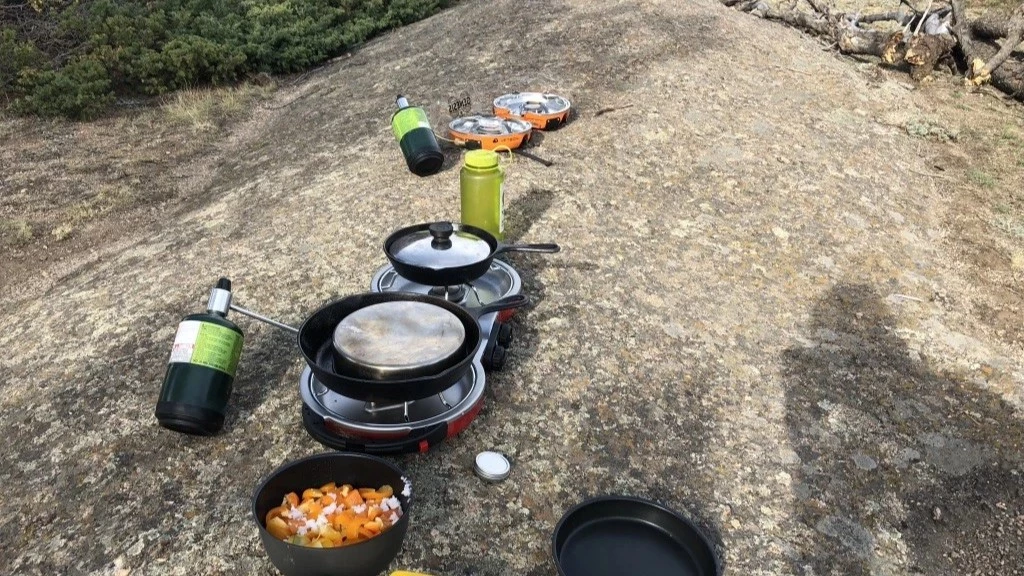
Wind protection is another critical engineering factor. Look for stoves with deep-set burners and three-sided rectangular windscreens. These protect the flame far more effectively than basic L-shaped designs, ensuring your fuel is heating the pan rather than the surrounding air. Regarding sustainability, many modern campers are moving away from the disposable 16-ounce green propane canisters. Using a refillable 5-to-20-pound propane tank with a hose adapter is a more cost-effective and environmentally friendly way to power your basecamp kitchen.

Pro Tip: If your stove has a Piezoelectric starter, always keep a manual lighter in your kit. Mechanical igniters are convenient but can fail in humid conditions or at high altitudes.
Backpacking Stoves: Minimalism in the Backcountry
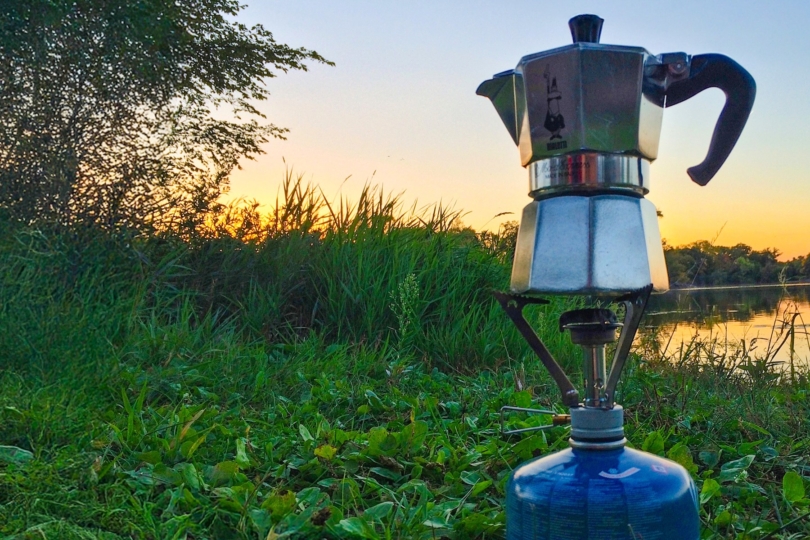
In the world of trekking, every gram is a grievance. Backpacking stoves are engineered for portability with average burner weights between 2 and 6 ounces, whereas car camping stoves are considerably heavier, with some high-output, multi-burner models weighing more than 30 pounds. A backpacking stove comparison usually reveals a trade-off between weight and simmering capability.
Ultralight enthusiasts often gravitate toward minimalist burners like the Soto Windmaster, which weighs about 2.3 ounces, or even the budget-friendly BRS, which clocks in at a staggering 0.92 ounces. These "canister top" stoves are incredibly compact—often smaller than a fist—and screw directly onto an isobutane-propane fuel source. They are optimized for one task: boiling water for dehydrated meals or coffee as quickly as possible.
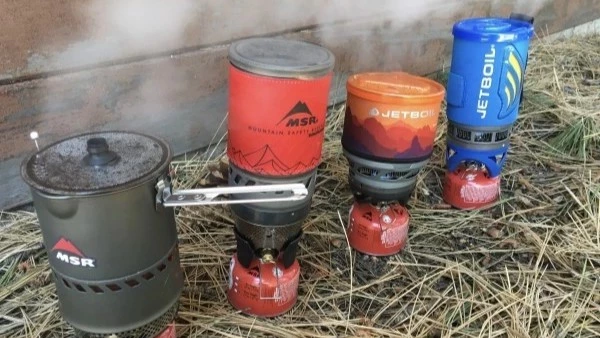
If you are looking for affordable ultralight backpacking stove recommendations 2026, focus on stoves with integrated pressure regulators. These maintain a consistent flame even as the fuel canister runs low or the temperature drops. While these stoves excel at boiling—averaging 10 liters of water per 100g of fuel—they often lack the simmering capability of their larger cousins. If you plan to cook actual food (like rice or pasta) rather than just "adding hot water," look for burners with a wider head to prevent scorching in the center of your pot.
The Efficiency Paradox: Windscreens and Fuel Tips
Understanding camping stove btu ratings and boil times involves more than just looking at the highest number. Raw power does not always equal heat transfer. This is what we call the BTU Paradox: a 20,000 BTU burner might boil water slower than a 10,000 BTU burner if the wind is stripping the heat away or if the pot is placed too far from the flame.

To maximize your camping stove fuel efficiency, always use a lid. It sounds simple, but it can reduce boil times by up to 20%. Furthermore, your camping stoves with best wind resistance and simmering features will generally have a burner head that sits lower in the chassis, protected by a built-in windshield.
As for cold weather, standard isobutane canisters begin to struggle as temperatures approach freezing because the liquid fuel cannot vaporize properly. For those seeking camping stove fuel efficiency tips for cold weather, consider a "remote canister" stove that allows you to invert the fuel can, or switch to a liquid fuel stove that runs on white gas. White gas remains pressurized in sub-zero temperatures and is the preferred choice for winter expeditions or international travel where propane canisters might be hard to find.
FAQ
What are the different types of camping stoves?
Camping stoves are generally categorized by their fuel source and design. The most common are canister stoves (isobutane-propane), liquid fuel stoves (white gas), and propane stoves (commonly used for car camping). Within these, you will find tabletop models, freestanding stoves with legs, and ultralight integrated systems designed for backpacking.
How do I choose the right camping stove for my needs?
The choice depends on your group size and how far you plan to carry the gear. If you are staying near your vehicle and cooking for a family, a two-burner propane stove is the best choice. If you are hiking miles into the wilderness, prioritize a lightweight, compact canister stove that fits inside your cook pot.
What is the best fuel for a camping stove?
Propane is the best for car camping because it is clean-burning, easy to handle, and starts instantly. For backpacking, isobutane-propane canisters are preferred for their high energy-to-weight ratio. For extreme cold or international travel, white gas is the most reliable and versatile option.
How long does a camping stove fuel canister last?
On average, a standard 100g backpacking canister will provide about 60 to 90 minutes of burn time at full power, which is enough to boil roughly 10 to 12 liters of water. For car camping, a 16oz propane bottle typically lasts about 1.5 to 2 hours with both burners on high.
How many BTUs do I need for a camping stove?
For backpacking, 8,000 to 12,000 BTUs is sufficient for boiling water for one or two people. For car camping, look for at least 10,000 BTUs per burner. If you frequently cook in windy conditions or for large groups, upgrading to 20,000 BTUs will provide the extra power needed to maintain heat.