Our Top Picks
- Best for Long-Distance: The Garmin eTrex Solar for hikers who prioritize battery over maps.
- Best for Remote Safety: The eTrex Solar for its multi-band GNSS accuracy in deep canyons.
The Garmin eTrex Solar provides up to 200 hours of battery life in standard tracking and can achieve infinite battery life when exposed to at least 75,000 lux of sunlight. While it lacks internal topographic mapping, its multi-band GNSS and solar-charging capabilities make it a premier choice for off-grid endurance. In this Garmin eTrex Solar review, we break down its 75,000 lux solar performance and multi-band accuracy.
Battery Mastery: The 75,000 Lux Reality
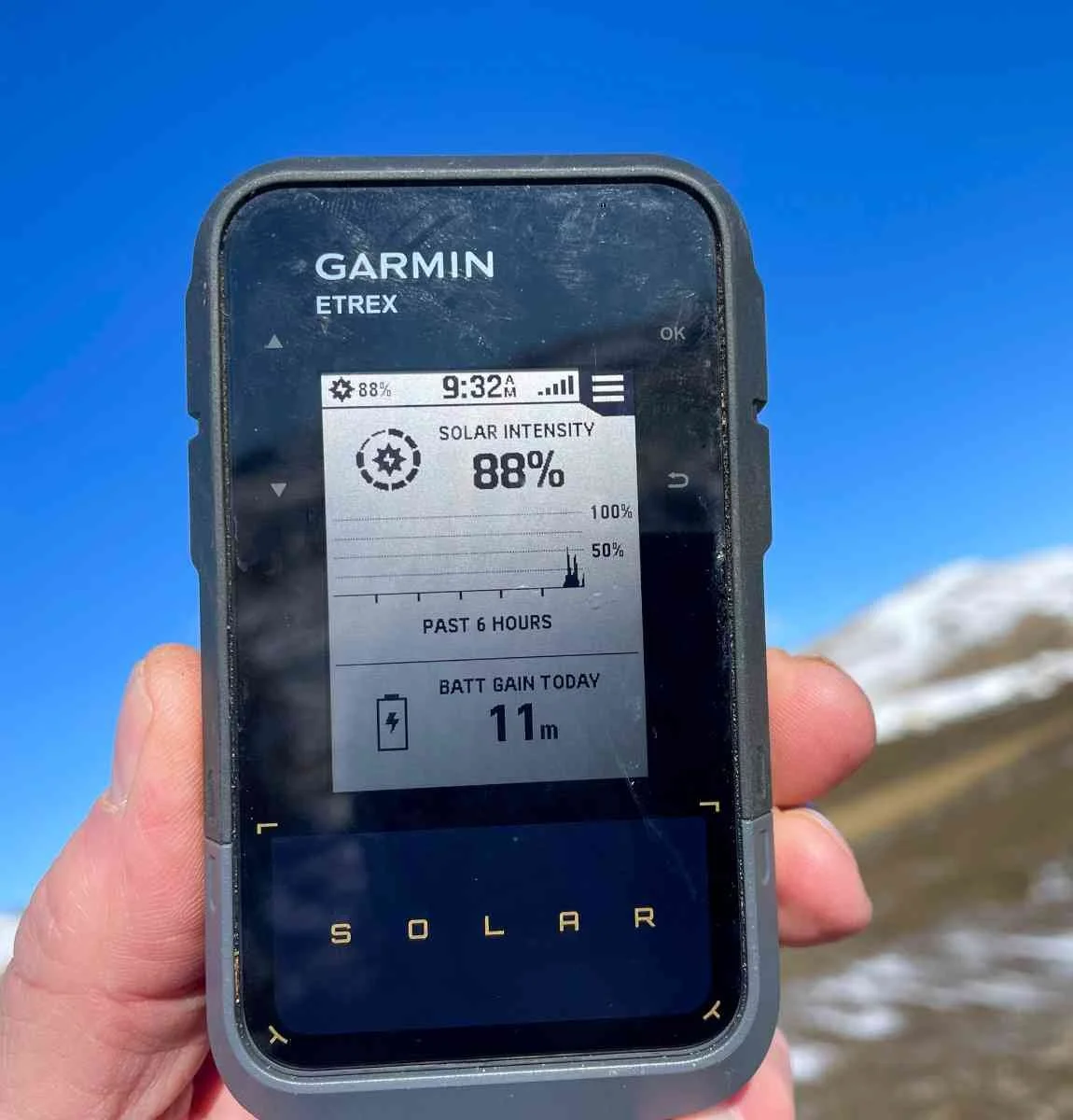
The headline feature of this device is its promise of never reaching for a charging cable. Garmin has integrated photovoltaic charging directly into the screen’s face, a technology that converts photons into usable energy to top off the internal lithium-ion battery. While most enthusiasts are used to measuring battery life in days or hours, the eTrex Solar introduces a new metric: lux measurement.
To achieve what the company calls infinite battery life, the device requires exposure to roughly unlimited battery life when used in sunny conditions of at least 75,000 lux. For context, a bright, clear summer day can easily exceed 100,000 lux, while a heavily overcast sky might drop below 20,000 lux. This means that if you are thru-hiking across a sun-drenched desert plateau, the device will likely outlive your legs. However, in the damp, shaded forests of the Pacific Northwest, the solar efficiency may vary, shifting the burden back to the internal battery capacity.
Even without the help of the sun, the base performance is impressive. Base tests indicate that without solar charging, the handheld GPS unit offers up to 200 hours of battery life in GPS-only mode and up to 1,800 hours in expedition mode. Expedition power mode significantly reduces the frequency of satellite pings, allowing the unit to remain active for months on a single charge. This makes it an ideal companion for multi-week expeditions where weight is at a premium and every ounce of a power bank matters.
| Mode | Battery Life (No Solar) | Battery Life (75,000 Lux Sunlight) |
|---|---|---|
| GPS Tracking (1-sec interval) | 200 Hours | Infinite |
| Expedition Mode | 1,800 Hours | Infinite |
| Watch/Standby Mode | 1,000+ Hours | Infinite |
Navigation Precision: Multi-Band GNSS Performance
While the power source is the hook, the soul of any GPS is its accuracy. The eTrex Solar marks a significant departure from the budget eTrex models of old by including multi-band GNSS technology. By accessing both L1 and L5 frequencies from Global Navigation Satellite Systems, the device can better filter out signal interference caused by bouncing off rock walls or dense canopy.
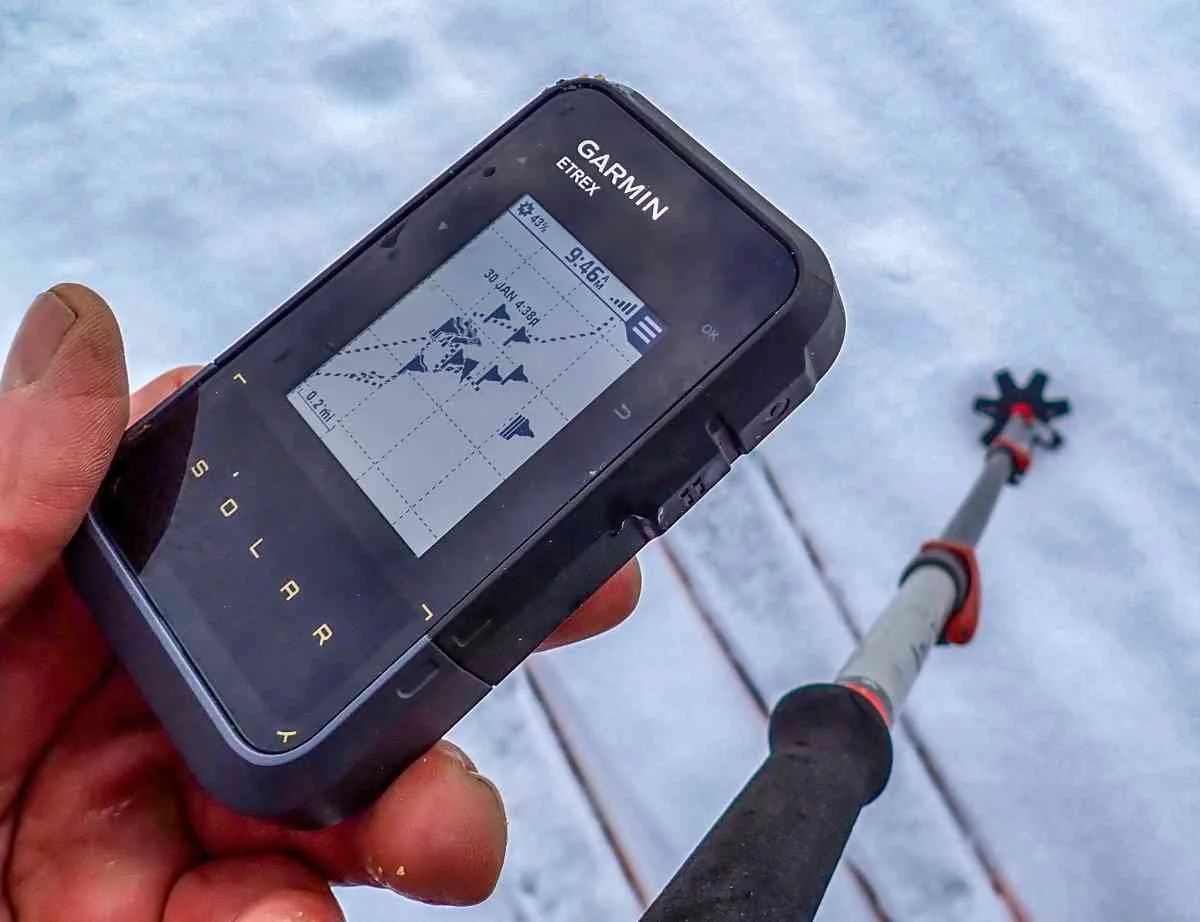
In our Garmin eTrex Solar multiband GNSS accuracy review, the unit performed exceptionally well in environments that traditionally baffle single-band receivers. In deep mountain draws and urban canyons, the positional drift was minimal. This level of precision is critical for users who rely on breadcrumb trail plotting to find their way back to a trailhead or for rescuers who need precise coordinates for an evacuation.
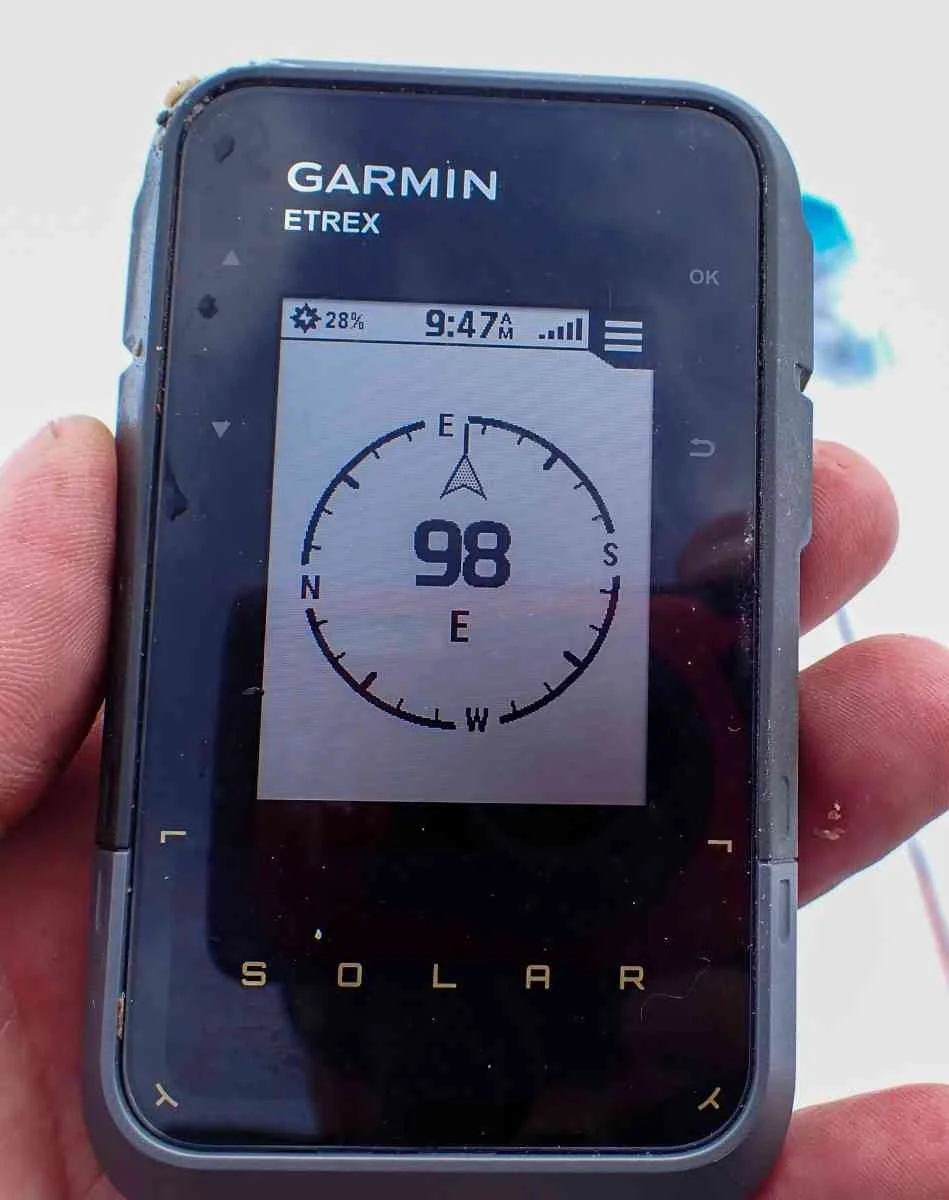
The unit also features a digital magnetic compass. Unlike older entry-level models that required you to be moving for the compass to orient itself via GPS, the magnetic sensor works while you are standing still. This is vital when you reach a trail junction and need to determine your bearing before taking the first step. For those who want to point the device at a distant peak and travel along that line, the Sight 'N Go feature provides a reliable directional lock, making off-trail navigation significantly more intuitive.
The Trade-off: Mapping and the Garmin Explore App
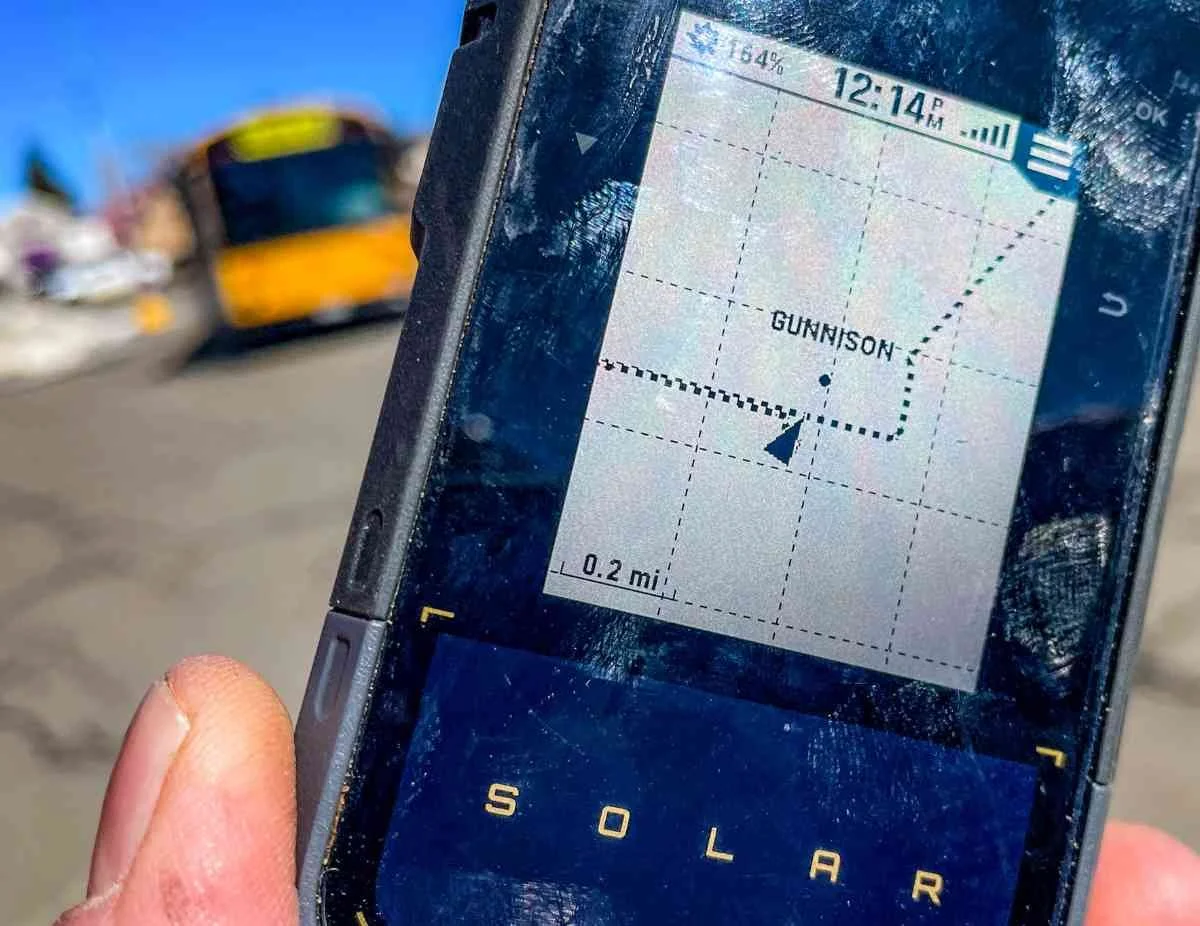
Before investing in this unit, one must understand the fundamental trade-off of the eTrex Solar: it is not a mapping unit. While the high-contrast display is arguably the most readable screen Garmin has ever produced in direct sunlight, it is a 2.2-inch monochrome panel. You will not find topographic contour lines, shaded relief, or colorful street maps here. Instead, you see your position relative to a series of waypoints and a trail line on a blank background.
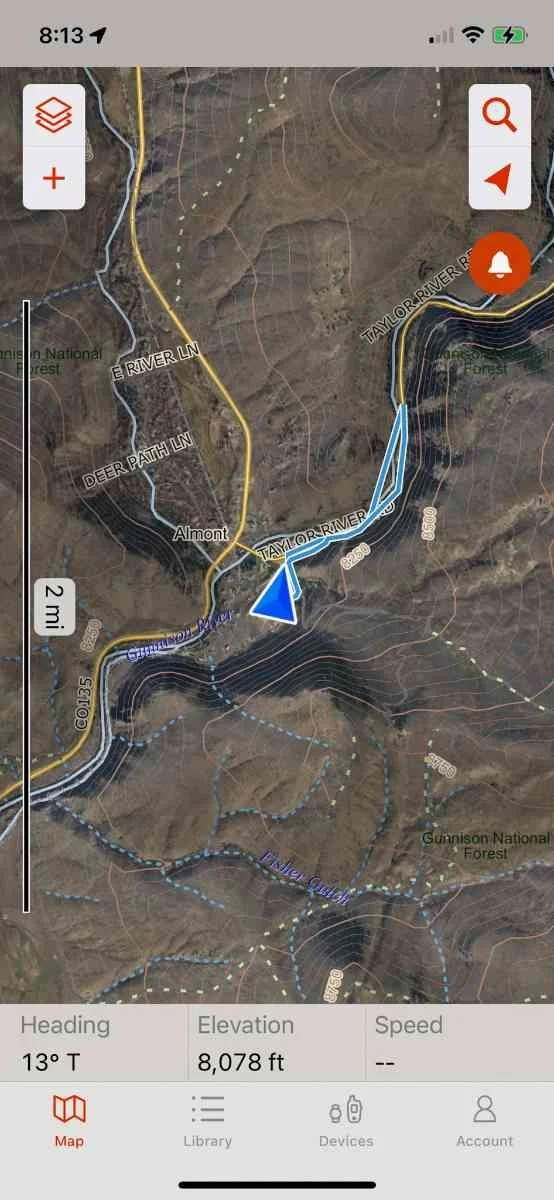
For some, this is a dealbreaker. If you are comparing the Garmin eTrex Solar vs eTrex 32x for hiking, the 32x offers a color screen with full topo maps and a microSD slot for expanded data. The Solar model, by contrast, relies on its USB-C connectivity to bridge the gap. To see where you are on a real map, you must connect the handheld to the Garmin Explore app on your smartphone.
This hybrid approach works well for the modern hiker. You keep your phone—with its fragile screen and poor battery life—safely tucked in your pack or pocket. You use the rugged eTrex Solar on your pack strap or in your hand for constant tracking and heading checks. When you need to consult a detailed topographic map to check elevation gain or nearby water sources, you pull out the phone, let it sync via Bluetooth, and view the high-resolution map data within the app. It is a system that pairs the durability of a dedicated GPS with the visual power of a smartphone.
Connecting and Syncing
The process of connecting Garmin eTrex Solar to Garmin Explore app is straightforward. Because the unit lacks a cellular modem or Wi-Fi, the app acts as its data gateway. This connection allows you to download fresh satellite imagery to your phone, upload GPX tracks for a planned hike, and even receive smart notifications from your phone on the eTrex screen. The Garmin Explore ecosystem also manages firmware updates, ensuring the unit stays current without needing a desktop computer.
Ruggedness and Reliability: Winter Performance Warning
The eTrex Solar is built to be a piece of thru-hiking gear that lasts for years. It carries an IPX7 rating, meaning it can handle being submerged in a meter of water for 30 minutes. It feels dense and durable in the hand, with a textured grip that survives rain and mud. However, our testing revealed a critical limitation for those who venture into high altitudes or extreme latitudes.
Warning: Cold Weather Sensitivity While the unit excels in summer conditions, we observed significant performance degradation in extreme cold. Specifically, we noticed a consistent failure point at temperatures below 15°F. Despite the official rugged rating, the internal battery chemistry and the solar glass seem to struggle in deep-freeze environments, occasionally causing the screen to freeze or the unit to power down unexpectedly.
For the three-season hiker or the desert explorer, this is a non-issue. But for those researching Garmin eTrex Solar winter hiking performance, it is important to keep the device close to your body heat rather than on an external backpack mount when the mercury drops below zero.
Specialty Modes: Geocaching and Sight ‘N Go
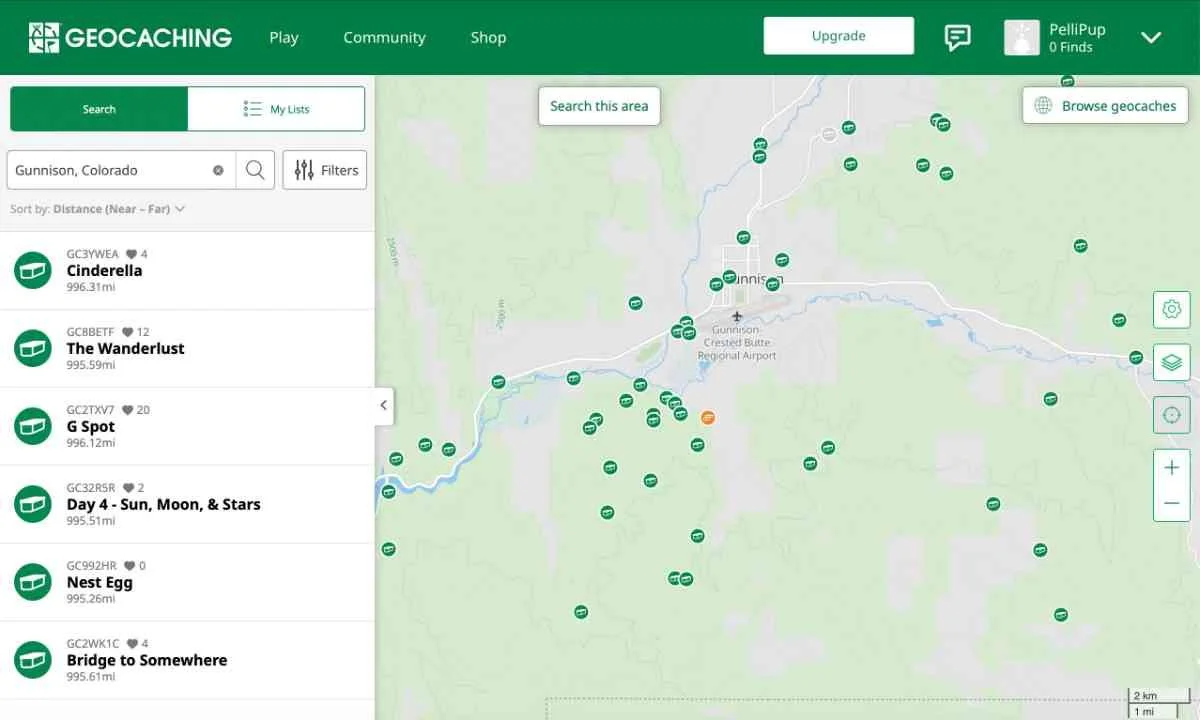
For hobbyists, the Garmin eTrex Solar geocaching capabilities are a major selling point. The device supports live geocaching updates when paired with your phone. This means you can view descriptions, hint logs, and recent activity from the global database without ever needing to print out a page or manually enter coordinates. It turns the device into a dedicated tool for paperless treasure hunting.
Setting up the device for a hunt is simple. You can follow our Garmin eTrex Solar geocaching setup guide: first, ensure your Garmin Connect and Explore accounts are linked; then, navigate to the Geocaching menu on the device. When you are within range of a cache, the high-contrast display makes it easy to follow the electronic waypoint tracking toward your destination.
Beyond caching, the unit includes basic tools like a sunrise/sunset calendar, a moon phase tracker, and an area calculation tool. These are the "staples" of the eTrex line, kept simple to ensure the processor doesn't drain the battery.
Verdict: Is It Right For You?
The Garmin eTrex Solar is a specialized tool. It is not trying to be a smartphone or a high-end mapping computer like the Montana series. It is a minimalist, ultra-durable tracking device designed for people who go far away and stay there for a long time.
Pros
- Infinite battery potential in sunny environments.
- Superior multi-band GNSS accuracy for challenging terrain.
- USB-C charging and modern app connectivity.
- Incredible screen readability in direct sunlight.
Cons
- No on-device topographic mapping.
- Monochrome screen may feel dated to some.
- Struggles in temperatures under 15°F.
- Requires a smartphone for full map visualization.
If you are a traditionalist who values the simplicity of a breadcrumb trail and the security of a device that won't die on day three of a week-long trek, this unit is unparalleled. It represents a paradigm shift where the sun becomes your primary power source, finally freeing hikers from the "low battery" warning.
FAQ
How long does the battery last on the eTrex Solar?
In standard GPS tracking mode, the internal battery lasts for up to 200 hours. In expedition mode, this extends to 1,800 hours. However, with consistent exposure to 75,000 lux of sunlight, the solar panel can supplement the power draw enough to provide infinite battery life, meaning you may never need to plug it into a wall.
Is the Garmin eTrex Solar worth the money?
For long-distance hikers, geocachers, and off-grid explorers who prioritize reliability and battery life over complex maps, the eTrex Solar is well worth the investment. It provides professional-grade satellite accuracy and solar technology that is rare at its price point, though users who need detailed on-screen maps might prefer the eTrex 32x.
How effective is the solar charging on the eTrex Solar?
The solar charging is highly effective in open, sunny environments. The device features a solar intensity graph that allows you to see how much energy is being harvested in real-time. In 75,000 lux conditions, it cancels out the battery drain from GPS tracking entirely. It is less effective in deep shade or heavy clouds, but still provides a measurable boost to overall battery longevity.
What is the difference between the eTrex Solar and eTrex SE?
While both units share a similar chassis and monochrome screen, the eTrex Solar adds the photovoltaic charging panels and multi-band GNSS support. The eTrex SE is cheaper but relies solely on replaceable AA batteries and lacks the advanced satellite frequencies found in the Solar model, making the Solar version much more accurate in difficult environments like canyons or forests.